





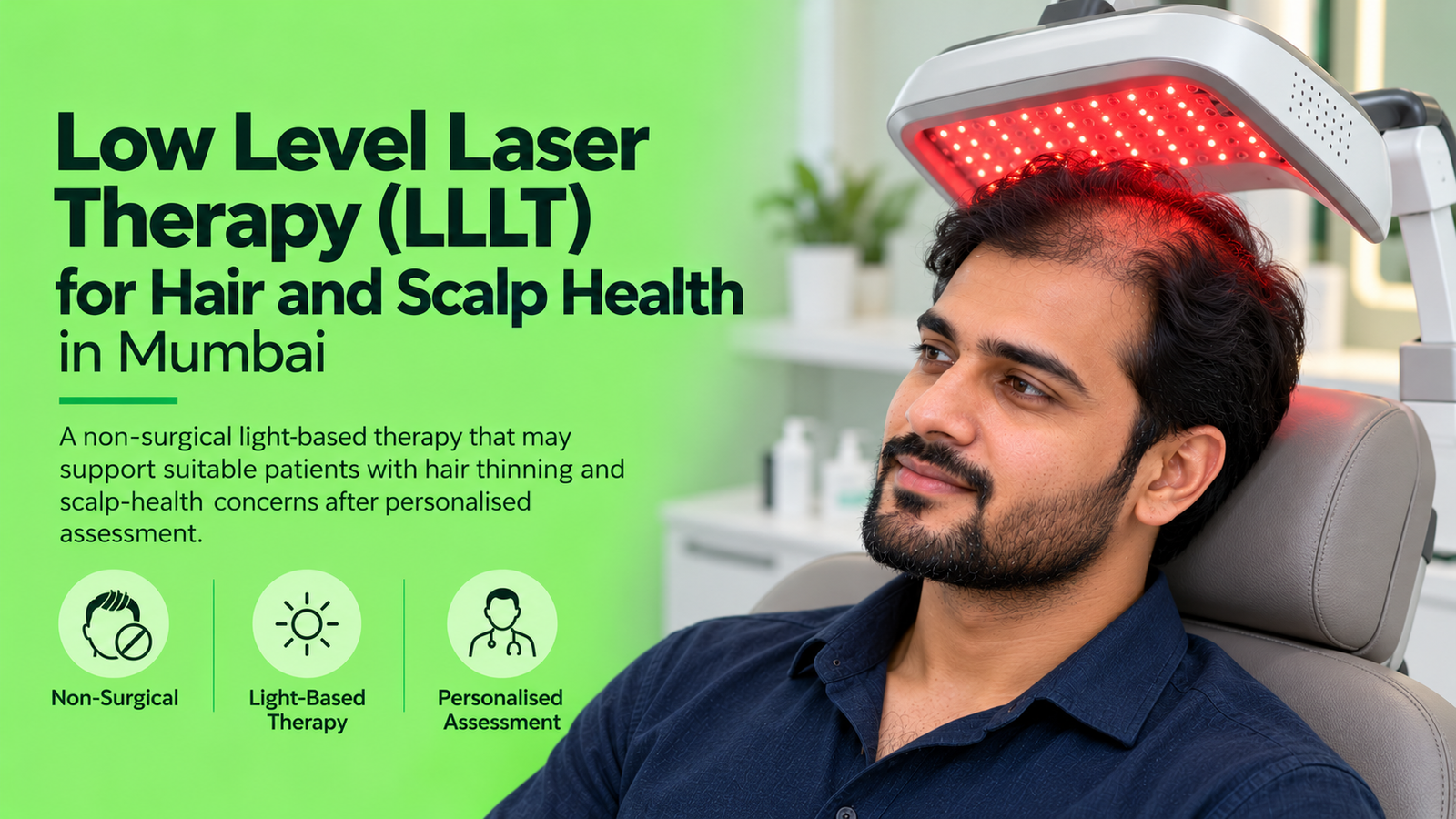
Low Level Laser Therapy (LLLT) for Hair and Scalp Health in Mumbai
Hair thinning can develop gradually, sometimes before a person notices substantial hair loss. When follicles are still present but producing finer hair, treatment may focus on supporting existing hair, addressing the underlying cause and slowing further thinning.
Low Level Laser Therapy (LLLT), also called low-level light therapy or photobiomodulation, is a non-surgical approach that uses specific forms of low-intensity light. It may be considered as part of hair-loss management for selected patients.
At Anagen Hair Transplant Clinic in Mumbai, the first consideration is whether light-based therapy is appropriate for the patient’s diagnosis, scalp condition and broader hair-restoration plan.
What Is Low Level Laser Therapy?
Low Level Laser Therapy uses controlled light exposure to produce biological responses in targeted tissue without intentionally damaging or removing the skin.
In hair-loss management, LLLT is studied primarily for its potential effect on living hair follicles, especially in androgenetic alopecia, also known as male or female pattern hair loss.
Light-based devices used for hair treatment may contain lasers or light-emitting diodes. Their design and output can vary, and individual treatment protocols are device-dependent.
LLLT should not be confused with surgical lasers, laser hair removal or procedures that deliberately heat and injure skin.
How Does LLLT Work?
Photobiomodulation is thought to influence cellular signalling and energy-related processes that may support follicular activity.
The biological mechanisms remain under investigation. Clinical research suggests that some patients with pattern hair loss can experience improvements in hair density with appropriate light-based therapy.
However, these findings do not mean that LLLT can revive permanently destroyed follicles, restore every bald area or treat all scalp disorders.
Who May Benefit from LLLT?
LLLT may be discussed with patients experiencing early or moderate pattern hair thinning, particularly where existing follicles remain active.
Potential candidates include:
- Men with gradual hereditary hair thinning.
- Women with diagnosed female pattern hair loss.
- Patients considering a non-surgical addition to an established treatment plan.
- Individuals seeking a supportive treatment option when appropriately selected by their doctor.
- Selected hair-transplant patients for whom the treating surgeon considers light therapy appropriate during aftercare.
Suitability depends on the diagnosis. A person with active scalp infection, unexplained inflammatory lesions, significant photosensitivity or a relevant medical contraindication requires further assessment before treatment.
Patients with completely bald, scarred areas should not expect LLLT to recreate missing follicles.
What Happens During an LLLT Session?
A typical light-based treatment pathway begins with scalp assessment and selection of an appropriate treatment method.
Depending on the equipment, controlled light is delivered through a cap, helmet, panel, comb-like device or another purpose-designed system.
The treatment itself does not involve graft extraction, scalp incisions or injections.
The device, session duration, treatment frequency, protective measures and whether therapy is clinic-based or home-based depend on the particular system being used.
Anagen device and protocol:
Patients should follow the prescribed instructions rather than increasing exposure on their own, because more frequent use does not automatically mean better results.
Can LLLT Improve Hair Density?
Some clinical studies have reported improvements in hair density among patients with androgenetic alopecia receiving low-level light therapy.
The evidence is more established for pattern hair loss than for other forms of alopecia.
Results depend on the patient’s diagnosis, duration of thinning, remaining follicular activity, treatment consistency and other therapies being used.
A measurable improvement in density does not necessarily mean a dramatic cosmetic transformation. Some patients may notice limited change despite following treatment instructions.
LLLT should therefore be considered an option within a broader treatment strategy rather than a universal solution.
LLLT Alongside Other Hair Treatments
For patients with established pattern hair loss, medical treatment may remain the main component of management.
A doctor may recommend a male hair loss prescription or female hair loss prescription according to the diagnosis and relevant medical factors.
LLLT may also be discussed alongside PRP hair treatment, iPRF or advanced GFC therapy in selected cases.
These treatments use different mechanisms. Combining them does not automatically improve outcomes for every patient, and clinical evidence for individual combinations varies.
In hair-transplant aftercare, the surgeon must determine whether and when light exposure is appropriate. Patients should not apply an LLLT device to a recently operated scalp without clearance.
How Long Does It Take to Notice Changes?
Hair growth is a slow biological process. Visible assessment generally requires repeated treatment and adequate follow-up over several months rather than a few days.
Progress may be reviewed using consistent clinical photographs, scalp examination and, where appropriate, hair-density measurements.
The timing and extent of any change vary. If the treatment is not helping, the diagnosis and overall plan should be reassessed rather than continuing indefinitely without review.
Safety and Limitations
LLLT is generally non-invasive, but its suitability and safety depend on the device, patient and treatment circumstances.
Some individuals may experience temporary scalp discomfort or irritation. Device-specific eye-safety instructions and precautions should be followed.
A doctor should review relevant photosensitivity conditions, medications and active scalp disease before recommending treatment.
LLLT does not replace medical assessment for scalp redness, scaling, painful lesions or unexplained hair shedding.
If the scalp is persistently irritated, identifying the cause of inflammation should take priority over adding further procedures.
Low Level Laser Therapy Cost in Mumbai
The cost of LLLT can vary according to the device, whether treatment is performed in the clinic or at home, the planned number of sessions and the overall treatment package.
A useful cost discussion should explain what the proposed treatment includes, how progress will be assessed and whether additional therapies are being recommended.
Current Anagen LLLT availability, device, session schedule and pricing:
Frequently Asked Questions
Is LLLT suitable for both men and women?
It may be suitable for selected men and women with diagnosed pattern hair loss. The underlying cause should be established before treatment.
Does LLLT hurt?
It is a non-invasive treatment and is generally well tolerated when used correctly. Individual discomfort and device-related precautions still need consideration.
Can LLLT regrow hair on a completely bald scalp?
It should not be expected to recreate follicles in areas where follicles are no longer functioning or have been permanently destroyed.
Can LLLT replace hair-loss medication?
Not necessarily. Medical treatment may remain necessary, depending on the diagnosis and the patient’s treatment goals.
Does LLLT treat dandruff or scalp infection?
LLLT used for pattern hair loss is not a substitute for appropriate dandruff management, antifungal treatment or investigation of scalp infection.
Can it be combined with PRP or GFC?
Selected patients may be considered for combination therapy, but the decision depends on clinical suitability, available evidence and the overall plan.
Discuss Whether LLLT Is Right for Your Scalp
Low Level Laser Therapy may have a supportive role for some patients with thinning hair, but it is not suitable for every type of hair loss.
A scalp assessment helps identify the cause of thinning, the condition of existing follicles and whether light-based therapy deserves a place in your treatment plan.
To discuss suitable non-surgical options, contact Anagen Hair Transplant Clinic in Mumbai.