




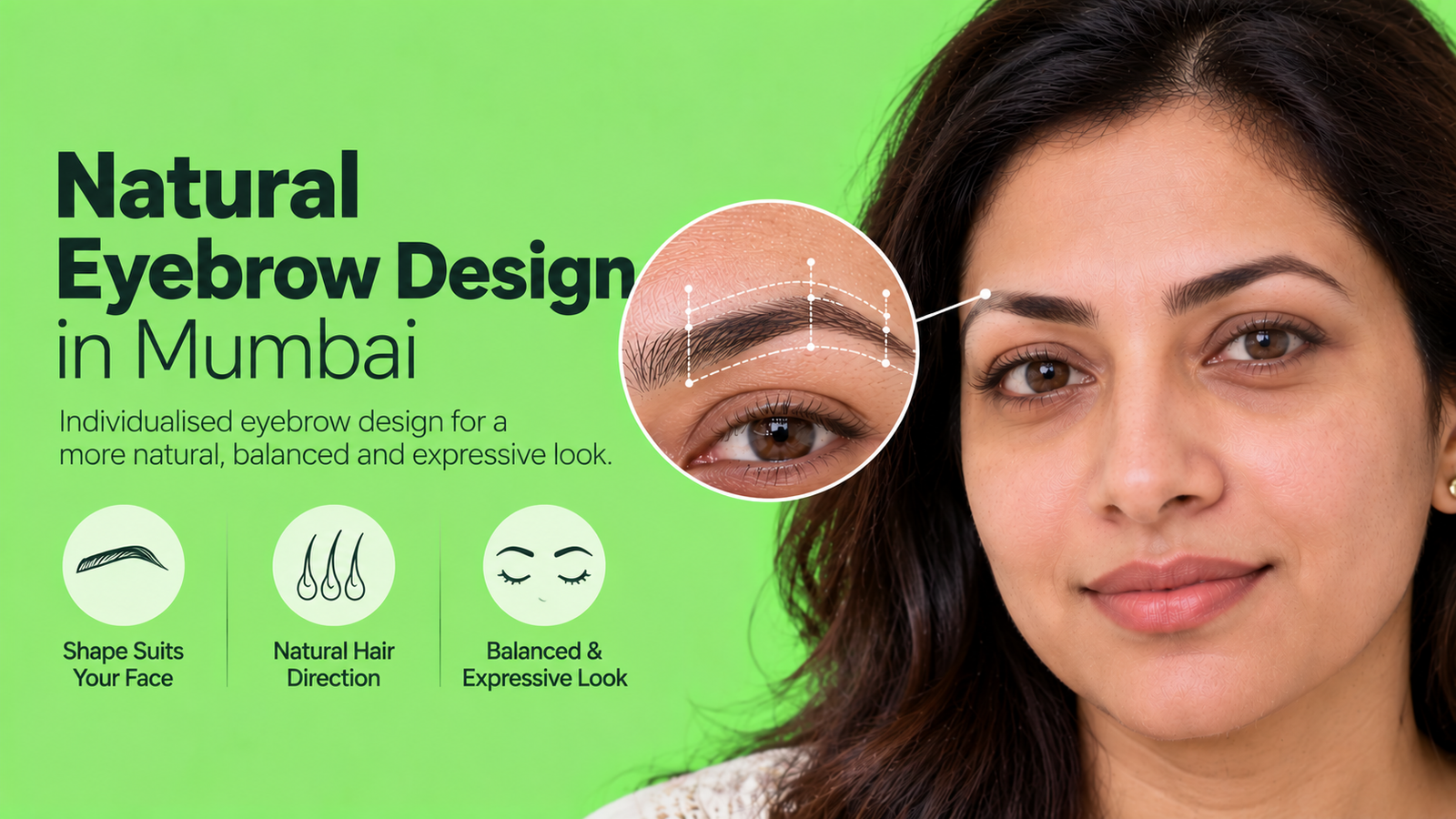
Natural Eyebrow Design in Mumbai
Natural eyebrow design is an important part of eyebrow restoration.
The appearance of an eyebrow depends not only on the amount of hair present but also on its shape, position, width, arch, hair direction and density.
An eyebrow may contain sufficient hair yet appear unnatural if these characteristics are poorly balanced.
At Anagen Hair Transplant Clinic in Mumbai, eyebrow design is approached as an individualised planning process that considers facial proportions, existing eyebrow anatomy and personal preferences.
The objective is not to reproduce the same eyebrow shape for every patient.
It is to establish a design that complements the individual’s face and provides an appropriate framework when restoration is required.
What Is Natural Eyebrow Design?
Natural eyebrow design involves assessing and planning the eyebrow’s shape, anatomical position, regional hair direction and density distribution.
The process may be relevant to people considering eyebrow transplantation, reconstruction or selective density enhancement.
It does not automatically require surgical treatment.
For some patients, a design consultation helps establish whether changing the eyebrow shape is realistic or appropriate.
For patients who require transplantation, the approved design provides an important guide for subsequent graft placement.
Unlike eyebrow makeup design, surgical eyebrow planning must account for the behaviour of individual living hair follicles, their growth direction, donor-hair characteristics and the anatomical limitations of the recipient area.
Understanding Natural Eyebrow Anatomy
An eyebrow consists of several anatomical regions that contribute differently to its overall appearance.
Eyebrow Head
The head is the inner portion of the eyebrow, closest to the nose.
It usually has a softer appearance and a distinctive hair-growth pattern.
Its position and width contribute to facial balance.
Eyebrow Body
The body forms the main central portion of the eyebrow.
Its width, curvature and hair density influence the eyebrow’s overall character.
Eyebrow Arch
The arch represents the eyebrow’s curvature and transition towards its lateral portion.
Its position varies according to facial proportions and natural eyebrow anatomy.
Eyebrow Tail
The tail is the outer portion of the eyebrow.
It usually narrows progressively and contains hairs that follow the lateral eyebrow’s natural direction.
Each region requires separate consideration during surgical restoration.
Why Eyebrow Design Should Be Individualised
There is no single eyebrow shape that suits every face.
Eyebrow design should consider the relationship between the eyebrows, eyes, forehead and surrounding facial anatomy.
The patient’s existing eyebrow characteristics provide valuable information about their natural appearance.
Personal preferences also matter, but a preferred eyebrow shape may need adjustment when it conflicts with individual anatomy or the practical limitations of transplantation.
The goal is to create a balanced appearance without forcing every patient into the same design.
Understanding Different Natural Eyebrow Shapes
Natural eyebrows can vary considerably in their curvature, width, position and lateral extension.
Some individuals have relatively straight eyebrows, while others have a gentle arch or more noticeable curvature.
The appropriate shape depends on facial anatomy and the patient’s natural characteristics.
During restoration planning, the surgeon considers the original eyebrow pattern whenever possible.
Design choices should not be based exclusively on temporary cosmetic trends.
Hair Direction: One of the Most Important Design Principles
Natural eyebrow hairs do not grow in one direction.
The orientation changes across the eyebrow.
Hairs near the medial eyebrow head often grow more vertically or obliquely.
Moving towards the eyebrow body, hair direction becomes progressively flatter.
The upper and lower eyebrow borders can contain hairs that converge towards one another.
The lateral eyebrow and tail follow their own regional direction and curvature.
When transplantation is planned, these directional differences influence recipient-site creation and graft placement.
Incorrect direction can make individual hairs more noticeable, particularly as transplanted scalp hairs become longer.
Understanding Low Hair Exit Angles
Natural eyebrow hairs generally emerge close to the skin surface rather than projecting prominently away from it.
This characteristic contributes significantly to the eyebrow’s appearance.
During surgical restoration, low exit angles are important for helping transplanted hair follow the intended eyebrow contour.
However, the correct angle varies according to the eyebrow region, individual anatomy and hair characteristics.
The surgical plan must therefore consider both the direction of growth and how the hair emerges from the skin.
Why Density Gradients Matter in Eyebrow Design
Natural eyebrows are not equally dense from beginning to end.
Their appearance depends partly on variations in density and the way individual hairs overlap.
The eyebrow head often benefits from a softer transition.
The central body contributes much of the eyebrow’s visible fullness.
The lateral eyebrow usually becomes narrower towards the tail.
During transplantation, density planning must reflect these differences.
Excessively uniform density or sharply defined borders can produce an artificial appearance.
The aim is to support natural variation rather than create mechanically identical hair distribution.
Donor-Hair Characteristics and Natural Appearance
When eyebrow design is being developed for transplantation, donor-hair characteristics must also be considered.
The thickness, texture and natural curvature of the selected hair can influence the final appearance.
Fine-calibre hair may be particularly valuable when creating soft eyebrow transitions.
Hair that is substantially thicker or curlier than the intended eyebrow pattern may require special consideration.
It is also important to understand that transplanted scalp hair may retain its original growth characteristics and require regular trimming.
The design should therefore reflect both aesthetic preferences and the practical limitations of available donor hair.
Natural Symmetry Versus Perfect Symmetry
Natural eyebrows are rarely exact mirror images.
Differences in eyebrow height, curvature, hair direction and density may be part of an individual’s normal facial appearance.
The purpose of eyebrow design is to achieve appropriate facial balance, not necessarily mathematical symmetry.
Excessive correction may produce an artificial appearance or create an eyebrow shape that is inconsistent with the person’s natural facial anatomy.
During planning, the surgeon should consider how the eyebrows look both individually and together.
Patient preferences remain important, but realistic anatomical limitations should be explained before finalising the design.
How Is Natural Eyebrow Design Planned?
Natural eyebrow design is a planning process. It is not automatically a surgical procedure.
Step 1: Facial and Eyebrow Assessment
The surgeon evaluates the patient’s facial proportions, existing eyebrow characteristics, anatomical landmarks and restoration requirements.
Step 2: Understanding Patient Preferences
The patient’s preferred eyebrow shape and concerns are discussed.
Photographic references may help explain preferences, although the final design must remain anatomically appropriate.
Step 3: Establishing the Eyebrow Outline
The proposed eyebrow head, body, arch and tail are identified.
The outline is developed according to the individual’s anatomy and treatment requirements.
Step 4: Regional Hair-Direction Planning
The surgeon evaluates the natural direction of existing eyebrow hairs and determines the intended hair orientations in regions requiring restoration.
Step 5: Density and Donor-Hair Planning
When transplantation is being considered, the proposed density distribution is assessed alongside suitable donor-hair characteristics.
Step 6: Design Review and Approval
The proposed design is reviewed with the patient.
Any appropriate adjustments are discussed before finalising the restoration plan.
How Is Eyebrow Design Different From Eyebrow Transplantation?
Eyebrow design establishes the proposed shape, regional direction and density pattern.
Eyebrow transplantation is the surgical process used to introduce hair follicles into selected eyebrow regions when restoration is clinically appropriate.
A patient can undergo eyebrow design assessment without necessarily proceeding to transplantation.
Patients with extensive eyebrow absence may require Eyebrow Reconstruction, while those with existing but sparse eyebrows may benefit from Eyebrow Density Enhancement.
For an explanation of the surgical procedure, donor selection and postoperative recovery, visit our Eyebrow Hair Transplant in Mumbai page.
Natural Eyebrow Design and Long-Term Results
The appearance of an eyebrow restoration depends on the relationship between its design and the behaviour of the transplanted hair.
A carefully considered outline, appropriate hair direction, low exit angles and suitable density distribution contribute to the intended natural appearance.
However, actual results also depend on donor-hair characteristics, graft growth, healing and the patient’s original eyebrow condition.
A design is a treatment plan rather than a guarantee of the final appearance.
Our dedicated eyebrow restoration results section can help patients understand how individual eyebrow characteristics influence restoration planning.
View natural eyebrow restoration results
Frequently Asked Questions
Is there one ideal eyebrow shape for everyone?
No. Appropriate eyebrow shape depends on facial anatomy, existing eyebrow characteristics and personal preferences.
Should both eyebrows be designed to look exactly identical?
Not necessarily. Natural facial asymmetry should be considered when establishing the overall design.
Why are eyebrow-hair direction and exit angle important?
These characteristics influence the way individual hairs follow the skin and contribute to the natural appearance of the eyebrow.
Does eyebrow design always require transplantation?
No. Design and transplantation are separate processes. A consultation may establish that surgery is unnecessary or unsuitable.
Can I select the exact eyebrow shape I want?
You can discuss your preferred appearance, but the final design should account for anatomical suitability, donor-hair characteristics and realistic treatment limitations.
Book a Natural Eyebrow Design Consultation in Mumbai
If you are considering eyebrow restoration and want to understand which eyebrow shape, density and hair pattern may suit your face, an individual consultation can help.
The assessment considers your existing eyebrow anatomy, facial proportions, treatment preferences and whether surgical restoration is necessary.
Contact Anagen Hair Transplant Clinic to arrange your consultation.