





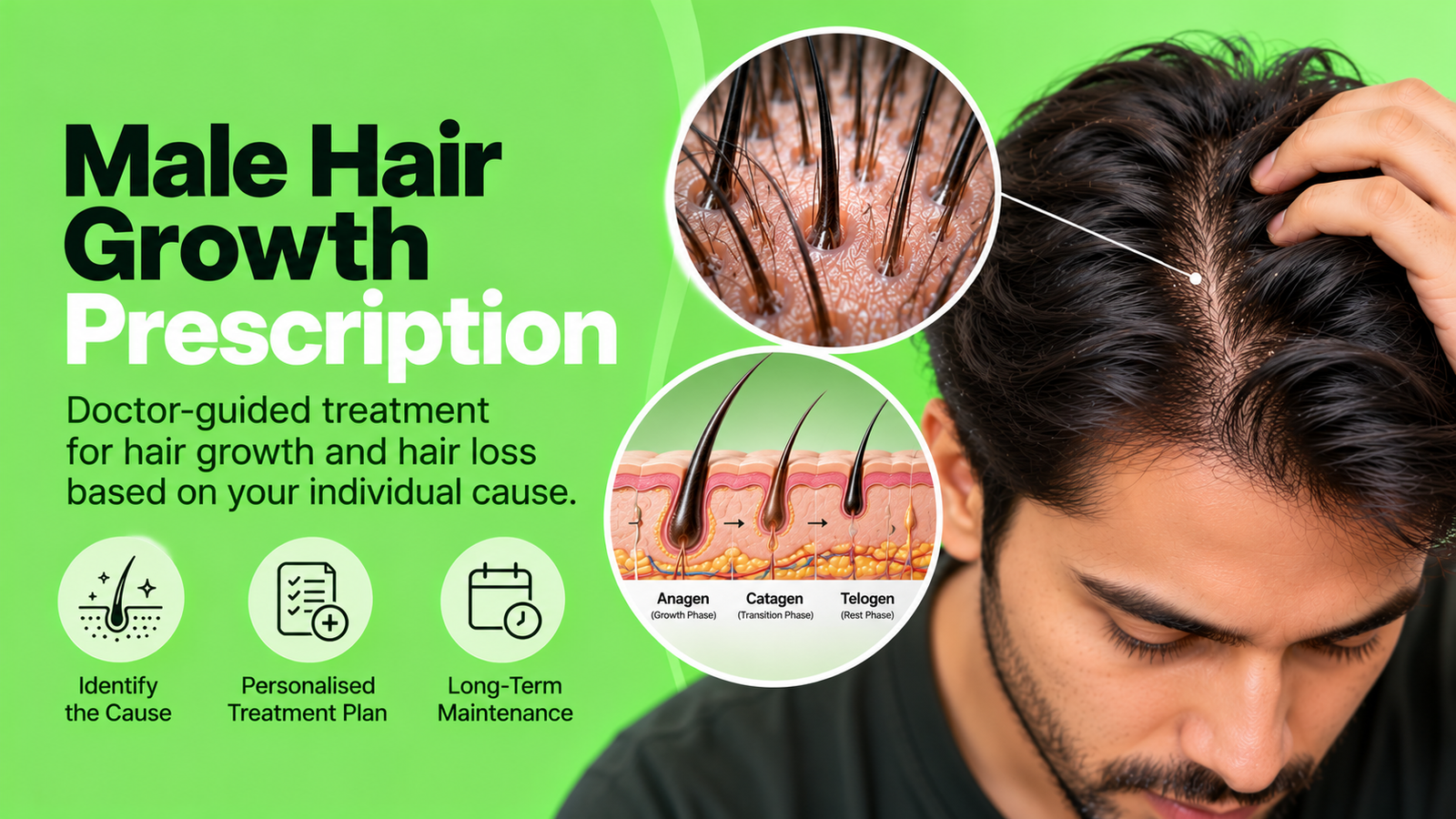
Male Hair Growth Prescription: Doctor-Guided Treatment for Hair Growth and Hair Loss
A male hair growth prescription should begin with a simple question: Why is the hair not growing normally, or why is the patient experiencing reduced hair coverage?
Some men notice progressive thinning around the temples or crown. Others experience sudden shedding, reduced hair volume, scalp irritation or slow recovery after a period of illness.
Although these concerns may look similar, they do not necessarily have the same cause or require the same treatment.
A doctor-guided male hair growth prescription aims to identify the underlying problem, assess the remaining follicular activity and select appropriate medical or supportive treatment according to the diagnosis.
The objective may be to reduce excessive shedding, support existing hair growth, improve responsive miniaturised hair or manage a condition affecting the normal hair-growth cycle.
Understanding the Male Hair-Growth Cycle
Scalp hair grows through a repeating biological cycle.
Anagen — Growth Phase
During anagen, a hair follicle actively produces a growing hair shaft. The duration of this phase influences how long the hair can grow.
Catagen — Transition Phase
The follicle gradually transitions away from active growth.
Telogen — Resting Phase
The hair is retained for part of the resting period before it is eventually shed. A new growth cycle may follow.
Exogen — Hair Shedding
This describes the release of the hair shaft. Normal shedding is part of the hair cycle, but excessive shedding can occur when the cycle is disrupted.
Different medical conditions influence hair growth in different ways. Androgenetic alopecia is associated with progressive miniaturisation, while telogen effluvium involves an increased number of hairs entering the shedding phase.
Understanding the distinction is essential before deciding which prescription category is appropriate.
Identifying Why Hair Growth Has Reduced
A male hair growth prescription cannot be selected from the symptom alone.
The doctor may consider several possibilities:
- Male androgenetic alopecia: Progressive, patterned thinning associated with follicular miniaturisation.
- Telogen effluvium: Increased shedding that may follow illness, physiological stress or another trigger.
- Nutritional deficiency: Relevant deficiencies may contribute to impaired hair growth or increased shedding.
- Thyroid-related disorders: Thyroid dysfunction can affect the hair cycle.
- Inflammatory scalp conditions: Some disorders can interfere with scalp and follicular health.
- Medication-related hair loss: Certain medicines can contribute to shedding.
- Hair shaft breakage: Hair may appear not to grow because the shaft repeatedly breaks.
- Other hair-loss disorders: Patchy, scarring or inflammatory conditions may require different evaluation.
The appropriate treatment depends on which of these processes is actually present.
Male Hair and Scalp Assessment
During consultation, the doctor may assess the pattern of hair loss, recent shedding, scalp symptoms, previous treatment and medical history.
The examination may include hair density, shaft calibre, evidence of miniaturisation, signs of inflammation and differences between scalp regions.
Trichoscopy may help distinguish progressive miniaturisation from other causes of hair loss.
Blood investigations should be selected according to the patient’s history and examination rather than ordered automatically for everyone.
For patients with typical patterned thinning, the Male Pattern Baldness Prescription and Androgenetic Alopecia Prescription pages explain the diagnosis-specific medical approach.
Prescription Overview
Primary Concern: Reduced hair growth, progressive thinning, abnormal shedding or reduced hair coverage in men.
Likely Assessment Focus: Hair-loss diagnosis, hair-growth cycle, follicular activity, scalp health and possible medical contributing factors.
Prescription Goal: Support growth in responsive follicles, manage the diagnosed cause of hair loss and reduce avoidable ongoing damage.
Possible Prescription Categories: Diagnosis-appropriate topical or oral medicines, treatment for scalp conditions and correction of identified medical or nutritional contributors.
Supportive Care: Appropriate cleansing, gentle hair care, dietary adequacy and management of relevant scalp symptoms.
Monitoring: Changes in shedding, hair coverage, hair calibre, scalp condition and treatment tolerance.
Follow-Up: Individualised medical review based on the diagnosis and selected treatment.
When Another Treatment May Be Considered: Persistent thinning despite appropriate treatment, inadequate native follicular coverage or a condition requiring additional specialised intervention.
What May Be Included in a Male Hair Growth Prescription?
Growth-Support Medicines
Topical minoxidil may be considered in appropriate cases of male androgenetic alopecia. It is not a universal treatment for every cause of male hair loss.
Other systemic hair-growth treatments may be considered in selected clinical circumstances, but their safety profiles and regulatory indications vary.
Androgenetic Alopecia Management
If the patient has confirmed androgenetic alopecia, treatment may include a medicine directed at the underlying androgen-related process, when medically appropriate.
The decision should account for expected benefit, possible adverse effects and the patient’s medical and reproductive history.
Cause-Specific Medical Treatment
When abnormal shedding is associated with thyroid disease, nutritional deficiency or another medical condition, addressing the underlying cause may be necessary.
An unnecessary hair-growth medicine should not substitute for correcting a recognised medical disorder.
Treatment of Scalp Disorders
Scalp inflammation or other clinically significant scalp disease may require separate treatment.
A suitable scalp-care regimen can complement medical management, but cosmetic products alone cannot treat every type of hair loss.
How Long Does Hair Growth Treatment Take to Assess?
Hair growth is a gradual biological process.
A patient may notice a change in shedding before a visible difference in coverage occurs. In other conditions, improvement may become apparent only after the underlying cause has been addressed and sufficient time has passed for new hair growth.
The expected response period varies by diagnosis, medicine and individual biology.
A doctor should explain when the first review is appropriate and when a more meaningful assessment of treatment effectiveness can be made.
Monitoring Hair Growth and Adherence
Follow-up should assess whether the original diagnosis remains appropriate and whether the chosen treatment is providing benefit.
The doctor may evaluate:
- Changes in excessive shedding.
- Stability of previously thinning areas.
- Hair shaft calibre and scalp coverage.
- New or persistent scalp symptoms.
- Correct treatment use.
- Medication tolerance.
- Need for adjustment or further investigation.
Standardised photographs are generally more useful than casual photographs taken at different distances and lighting conditions.
Hair Growth Prescription, Biologix and Transplantation
Different treatment categories have different purposes.
Prescription management addresses the diagnosed condition and may help preserve or support responsive existing hair.
Selected supportive procedures, including PRP, iPRF, GFC, low-level laser therapy or microneedling, may be discussed in suitable cases. Evidence and expected benefit differ between methods, and these treatments are not necessary for every patient.
Hair transplantation redistributes suitable donor follicles into areas with inadequate native coverage. It is not a general replacement for medical diagnosis or treatment of active hair-loss disorders.
These options do not represent a compulsory treatment sequence. A patient’s plan may involve one category, more than one category or no procedure at all.
Long-Term Hair Growth Maintenance
Maintenance depends on the cause of hair loss.
A patient with temporary shedding may require a different follow-up plan from someone with progressive androgenetic alopecia.
Some treatments require ongoing use to maintain benefit. Others may be discontinued or adjusted after the underlying issue has been addressed, depending on the doctor’s assessment.
The objective is an appropriate, sustainable treatment plan rather than indefinite use of every available hair-growth product.
Frequently Asked Questions
What is included in a male hair growth prescription?
It may include diagnosis-specific medicines, treatment of associated medical or scalp conditions, supportive care and a follow-up plan.
Is there one hair growth medicine suitable for every man?
No. The appropriate approach depends on whether the patient has androgenetic alopecia, temporary shedding, another hair-loss disorder or hair shaft damage.
How can I tell whether my follicles are still active?
Clinical examination and trichoscopy can help assess existing hairs and follicular characteristics, although they cannot guarantee treatment response.
Can prescription therapy be combined with PRP or GFC?
Selected combinations may be discussed, depending on the diagnosis, available evidence, treatment suitability and patient preference.
Can medicine regrow hair on a completely bald scalp?
Medical regrowth is generally limited where there is little remaining responsive follicular activity.
Does hair growth treatment need maintenance?
Some treatments do, particularly for chronic progressive conditions. Maintenance requirements should be discussed before treatment begins.
Male Hair Growth Prescription Consultation at Anagen
Reduced hair growth can result from several different conditions, and not all require the same medical treatment.
Anagen’s hair prescription consultation can help identify the likely cause, assess the scalp and existing follicles, and determine whether medical management, supportive treatment or another restoration approach is appropriate.
The emphasis should remain on diagnosis, safe treatment selection and realistic follow-up.