





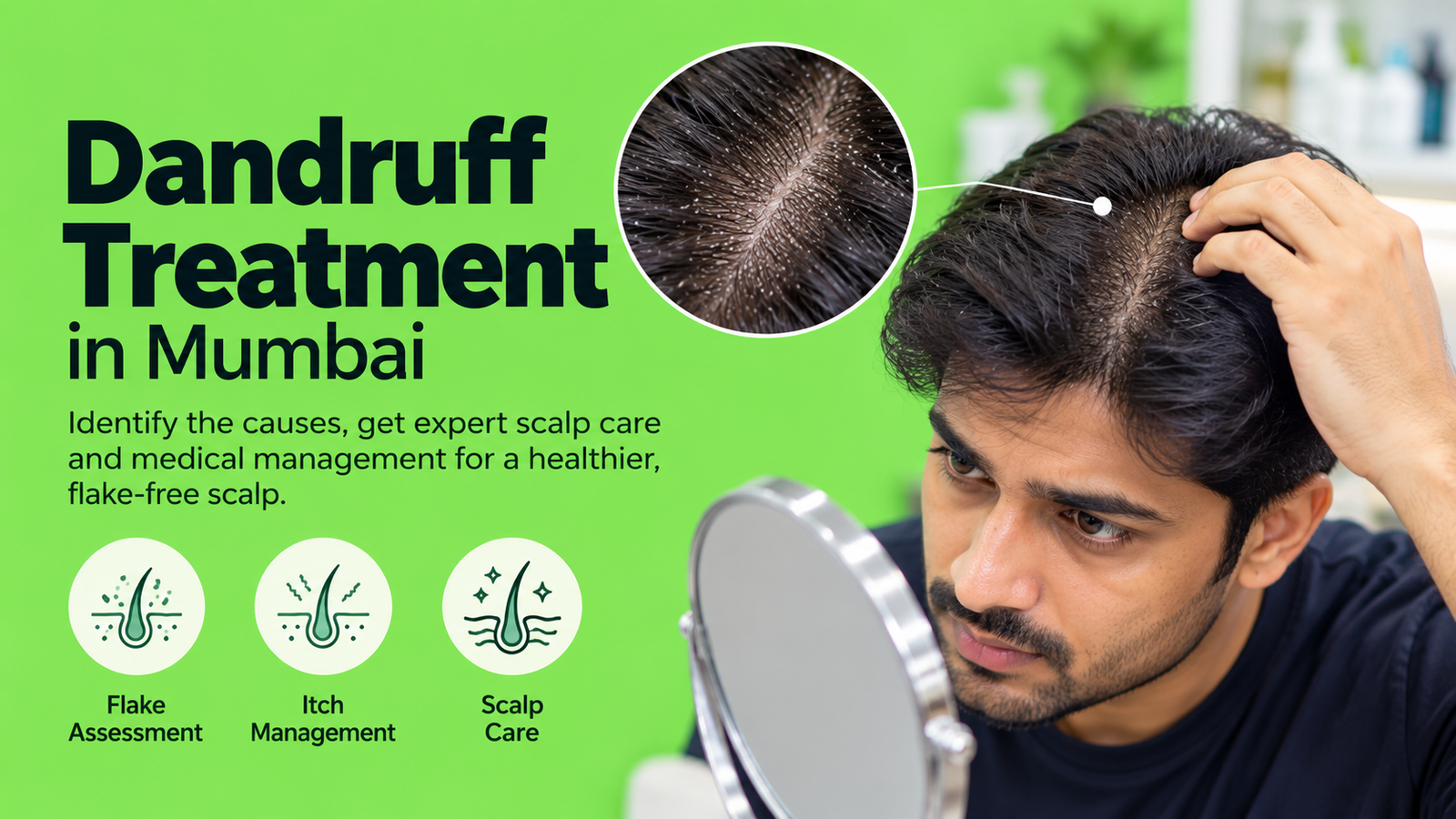
Dandruff Treatment in Mumbai — Causes, Scalp Care and Medical Management
Dandruff is one of the most common reasons people experience visible scalp flakes and itching.
Some notice small white flakes on their shoulders. Others experience repeated itching, especially when the scalp becomes oily or when symptoms return after stopping an anti-dandruff shampoo.
Although mild dandruff can often be managed with suitable scalp care, persistent or severe flaking may require medical assessment.
The important step is identifying whether the problem is ordinary dandruff, a dry or irritated scalp, seborrheic dermatitis or another condition that looks similar.
What Is Dandruff?
Dandruff is a common scalp condition in which dead skin cells shed as visible flakes, sometimes accompanied by itching.
It is often associated with oily skin, the activity of naturally occurring Malassezia yeast and individual sensitivity to scalp conditions.
Dandruff is not simply a sign of poor hygiene.
The visible flakes may be white or pale, sometimes dry and loose, and sometimes mixed with scalp oil.
Mild dandruff is commonly considered part of the same clinical spectrum as seborrheic dermatitis, although more pronounced inflammation and persistent disease require a different management approach.
Common Signs and Symptoms of Dandruff
Symptoms may include:
- Small white or pale flakes in the hair.
- Flakes visible on clothing or shoulders.
- Mild to moderate scalp itching.
- Repeated scaling after an apparently clear period.
- Oily scalp with visible flakes.
- Scalp discomfort that becomes more noticeable with unsuitable hair-care products.
Significant redness, thick adherent scale, painful lesions or patchy hair loss may suggest a condition other than uncomplicated dandruff.
Why Does Dandruff Keep Coming Back?
Dandruff commonly recurs because the underlying tendency to develop flaking may persist even when symptoms temporarily improve.
Several factors can contribute.
Scalp Oil and Malassezia
Malassezia is a yeast that normally lives on human skin. In susceptible people, interactions between yeast, scalp oil and the skin’s inflammatory response can contribute to flaking.
This does not mean that every person with dandruff has a contagious fungal infection.
Weather and Environmental Conditions
Some patients notice worsening symptoms during seasonal changes, changes in humidity or periods when scalp-care routines are disrupted.
Hair-Care Practices
Unsuitable products, incomplete rinsing or cleansing routines that do not match scalp needs can contribute to irritation or visible buildup.
Individual Skin Sensitivity
Some scalps react more strongly to products, environmental conditions and normal skin microorganisms.
Dandruff recurrence does not automatically mean the previous treatment failed. Maintenance may be necessary for patients who experience repeated episodes.
Dandruff vs Dry Scalp
Dandruff and dry scalp can both cause visible flakes, but they may require different care.
A dry scalp may result from insufficient skin hydration, harsh products or environmental factors.
Dandruff is commonly associated with scalp oil and an inflammatory response involving normal scalp microorganisms.
Both conditions may cause itching, and their appearance can overlap. Flake size or oiliness alone cannot reliably establish the diagnosis in every patient.
How Is Dandruff Diagnosed?
Mild dandruff is often identified from the patient’s symptoms and examination of the scalp.
A clinician may ask how long the flakes have been present, whether itching occurs, which products have been used and whether previous treatment provided relief.
The examination may also look for redness, thick scale, pustules, unusual hair breakage and involvement of areas such as the eyebrows or ears.
If the clinical picture suggests another disorder, the patient may require additional evaluation.
How Is Dandruff Treated?
Dandruff treatment generally combines suitable scalp cleansing with products directed at the underlying cause of flaking.
Anti-Dandruff Shampoo
Medicated anti-dandruff shampoos may contain antifungal ingredients or substances that help manage excess scale.
The appropriate product depends on the patient’s symptoms, scalp characteristics, medical history and any previous response to treatment.
Patients should follow the product instructions and clinician’s recommendations, including how the shampoo is applied and how long it remains on the scalp.
Regular Scalp Cleansing
Maintaining an appropriate washing routine may reduce surface buildup and help control symptoms.
The ideal washing frequency varies according to scalp oiliness, hair type and treatment requirements.
Managing Irritation
If a patient has substantial irritation or inflammation, shampoo alone may not be sufficient.
A dermatologist may recommend additional treatment after establishing the diagnosis.
Maintenance Care
Some patients need ongoing intermittent anti-dandruff care to reduce recurrence.
The goal is effective control with a practical routine, not repeated aggressive scrubbing.
When Is Dandruff More Than Ordinary Flaking?
Patients should seek medical assessment when dandruff is persistent, severe or accompanied by symptoms that suggest another condition.
Important signs include pronounced redness, painful areas, thick adherent scale, pustules, hair loss or significant irritation.
Recurrent greasy scale with visible inflammation may suggest seborrheic dermatitis, which can require a longer-term management plan.
Persistent tenderness, sores or unexplained shedding may require a broader scalp inflammation assessment.
Can Dandruff Cause Hair Loss?
Uncomplicated mild dandruff does not usually cause permanent hair loss.
However, persistent inflammation, repeated scratching and certain scalp diseases can contribute to temporary shedding or hair breakage.
Hair loss occurring alongside scalp flaking should not automatically be blamed on dandruff.
When significant thinning, broken hairs or patchy hair loss is present, the patient needs evaluation for other possible causes.
Can Scalp Detox Help Dandruff?
Gentle cleansing may remove oil and surface residue, but cosmetic scalp detox should not replace medical dandruff management.
If a patient has persistent scaling caused by an inflammatory scalp condition, repeated deep cleansing may be ineffective or irritating.
Routine scalp hygiene and medical treatment have different roles.
Dandruff Treatment Cost in Mumbai
The cost depends on whether the condition responds to suitable over-the-counter care or requires consultation, prescription treatment or additional investigations.
Patients should avoid purchasing large treatment packages without first identifying the cause of persistent scalp symptoms.
Frequently Asked Questions
Is dandruff contagious?
Ordinary dandruff is not generally considered contagious.
Does dandruff mean my scalp is dirty?
No. Dandruff can occur despite appropriate scalp hygiene.
Why does dandruff return after stopping shampoo?
Many patients have a recurring tendency to develop dandruff, so maintenance care may be necessary.
Should I apply oil to remove dandruff?
Oil is not a universal dandruff treatment. Heavy oil application may be unsuitable for some oily or inflamed scalps.
Can dandruff be permanently cured?
Symptoms can often be controlled, but recurrence is possible. A permanent cure should not be promised.
When should I consult a dermatologist?
Seek evaluation if symptoms are severe, persistent, painful, associated with marked redness or accompanied by unusual hair loss.
Get Your Persistent Dandruff Evaluated
Repeated flaking can be frustrating, particularly when multiple shampoos provide only temporary relief.
Identifying whether the problem is ordinary dandruff or another scalp condition is the first step toward appropriate care.
For assessment of recurrent flaking and scalp discomfort, contact Anagen Hair Transplant Clinic in Mumbai.