





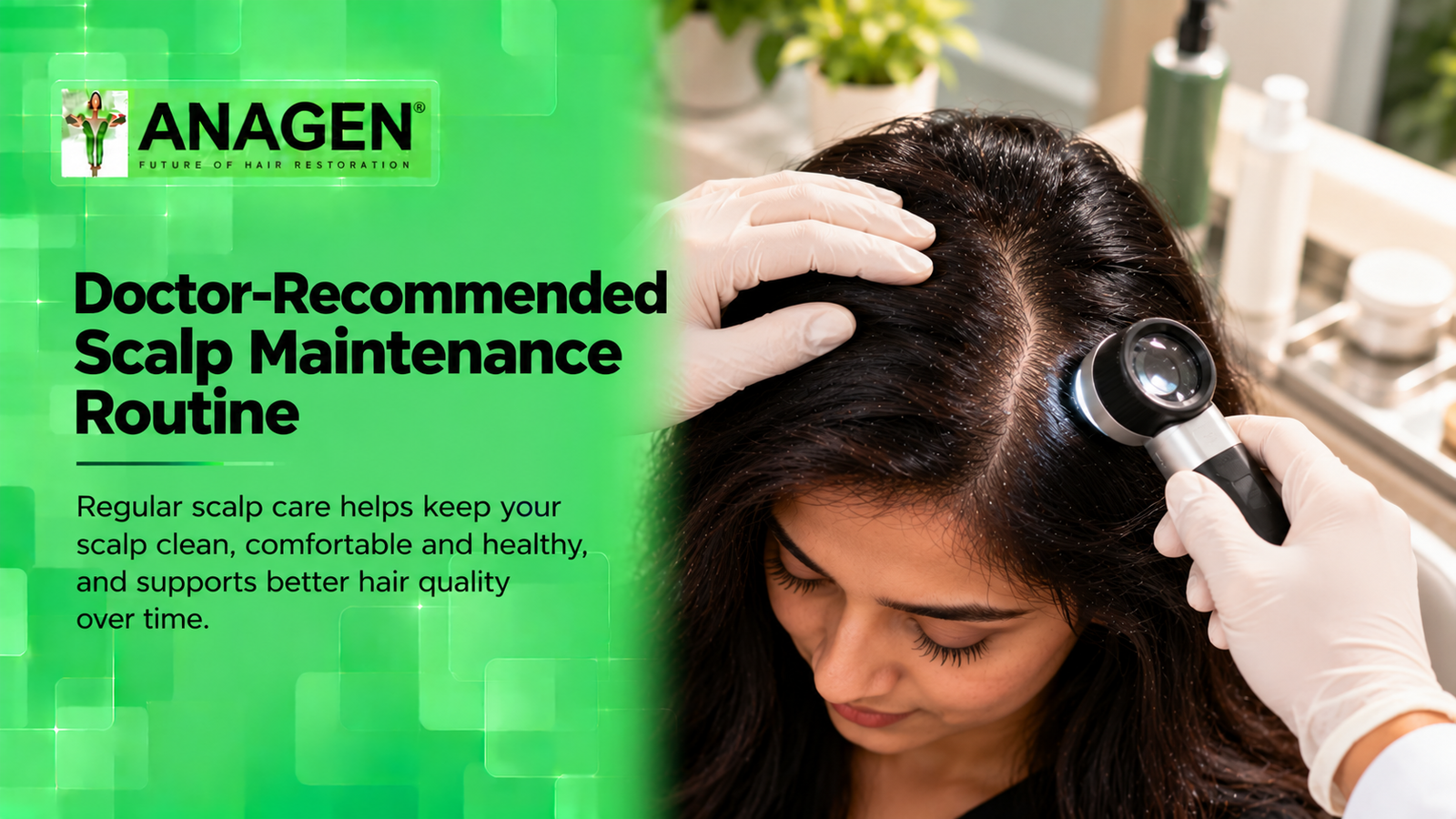
SCALP MAINTENANCE
Healthy hair care begins with appropriate scalp care. The scalp is living skin containing hair follicles, sebaceous glands and a natural skin barrier that can be affected by oil, sweat, irritation, inflammation and underlying medical conditions.
A scalp maintenance routine focuses on keeping the scalp clean and comfortable, selecting suitable products and recognising signs of scalp disorders.
At Anagen Hair Clinic, Mumbai, scalp care is considered an important part of overall hair management, particularly for people experiencing recurrent dandruff, itching, oiliness, sensitivity or ongoing hair-loss concerns.
However, cosmetic scalp maintenance is not a substitute for medical treatment when a scalp disease is present.
Why Is Scalp Maintenance Important?
The scalp is exposed to natural oil production, environmental particles, perspiration and residues from hair products.
Without suitable care, some individuals may experience excessive buildup, discomfort or worsening of an existing scalp condition.
An appropriate routine can help:
- Maintain regular scalp cleanliness.
- Manage excess oil and product buildup.
- Reduce avoidable irritation from unsuitable products.
- Support the scalp’s normal skin barrier.
- Improve comfort in people with dry or sensitive scalps.
- Identify persistent scaling, inflammation or other concerning changes.
A healthy scalp does not necessarily guarantee freedom from hair loss. Genetic, autoimmune and medical hair-loss disorders can occur even when the scalp appears normal.
Understand Your Scalp Type
Scalp maintenance should reflect your individual condition rather than follow one routine for everyone.
Oily Scalp
An oily scalp may become greasy soon after washing, particularly in hot or humid conditions.
People with oily scalps may require more frequent cleansing with an appropriate shampoo.
However, excessive use of harsh cleansers can cause dryness or irritation.
Dry Scalp
A dry scalp may feel tight or uncomfortable and sometimes show fine flaking.
Gentle cleansing and avoidance of irritating products may help, but not all scalp flakes are caused by dryness.
Persistent flaking should be assessed to distinguish dryness from dandruff or another inflammatory condition.
Sensitive Scalp
Some individuals experience burning, stinging, itching or discomfort after using particular products.
Fragrances, hair dyes, harsh cleansers and certain styling products may contribute to irritation or contact dermatitis.
Where a reaction is suspected, stop the suspected product and obtain medical advice if symptoms persist or are significant.
Dandruff-Prone Scalp
Recurrent dandruff may involve flaking, itching and sometimes visible inflammation.
An appropriate anti-dandruff shampoo can help some people, but product choice and treatment frequency depend on the underlying condition.
Persistent or severe symptoms require professional assessment.
Daily and Weekly Scalp Maintenance Routine
Step 1 — Cleanse According to Scalp Needs
Wash the scalp as often as necessary to manage oil, sweat, dirt and product buildup without causing excessive dryness.
People who sweat frequently or have an oily scalp may need more regular cleansing.
Others with dry, curly or tightly textured hair may prefer a different schedule.
Use your fingertips rather than nails when shampooing and rinse thoroughly.
For cleanser selection, read our Hair Shampoo guide.
[INTERNAL LINK — PAGE TO BE CREATED: Hair Shampoo]
Step 2 — Avoid Unnecessary Scalp Irritation
Avoid vigorous scratching, abrasive scrubs and repeated application of products that cause burning or discomfort.
A scalp product should be selected according to the concern it is intended to address.
A product marketed as natural or herbal is not automatically non-irritating or suitable for every patient.
Step 3 — Use Conditioning Products Appropriately
Conditioners, masks and cosmetic serums can improve the manageability of hair lengths.
They are not necessarily intended for direct scalp application, particularly if they contain ingredients that may cause irritation or buildup.
Follow product instructions and choose formulations suited to your hair and scalp.
For specific product categories, explore Hair Conditioner and Hair Masks.
Step 4 — Manage Dandruff With the Right Treatment
Mild dandruff may respond to appropriate anti-dandruff shampoos.
Depending on the clinical diagnosis, a clinician may recommend products containing active ingredients such as ketoconazole, selenium sulfide or other suitable agents.
Different formulations have different application instructions and contact times.
Use medicated products according to their instructions or a clinician’s advice.
Persistent dandruff, scalp redness or itching may require assessment for seborrhoeic dermatitis, psoriasis, contact dermatitis or another condition.
Step 5 — Monitor Changes in the Scalp
Observe whether you are developing:
- Persistent flaking or itching.
- Redness or tenderness.
- Burning after product use.
- Pimples or pustules around follicles.
- Thick scales or crusting.
- Localised hair loss.
- Areas of smooth or scar-like scalp.
Not every visible change requires treatment, but persistent or progressive symptoms should not be ignored.
Scalp Care for Patients Experiencing Hair Loss
Scalp maintenance and hair-loss treatment often need to be considered separately.
A person with androgenetic alopecia may have a scalp that looks normal but still experience progressive follicular miniaturisation.
Another person may experience scalp inflammation that requires specific treatment.
Some patients can have both conditions at the same time.
A clinical assessment may therefore review scalp symptoms, hair density, the pattern of thinning and relevant medical history.
For general preventive habits, explore Hair Fall Prevention Routine.
For medical evaluation of persistent shedding, see Hair Fall Control Prescription.
Scalp Maintenance After Hair Transplantation
Scalp care following hair transplantation requires a separate approach during the initial healing period.
Patients must follow their operating surgeon’s instructions regarding washing, topical products, scalp protection and management of postoperative symptoms.
Do not apply routine anti-dandruff shampoos, exfoliating products or cosmetic scalp serums to recently transplanted areas without surgical-team approval.
Once healing is adequate, general scalp maintenance may be gradually reintroduced.
Read our Post Transplant Hair Care guide for postoperative care information.
For long-term medical management, visit Post Hair Transplant Maintenance Prescription.
When Should a Scalp Problem Be Examined by a Doctor?
Arrange a clinical assessment if you experience:
- Persistent or severe itching.
- Recurrent inflammation or scaling.
- Significant scalp pain or tenderness.
- Pustules, discharge or suspected infection.
- Localised bald patches.
- Progressive hair loss associated with scalp inflammation.
- Shiny, scar-like or otherwise abnormal scalp areas.
- Symptoms that do not improve with appropriate basic care.
These findings can have different causes and should not be diagnosed from photographs or product advertisements alone.
Frequently Asked Questions
1. How often should I wash my scalp?
Frequency depends on scalp oiliness, hair type, sweating, product use and any diagnosed scalp condition.
2. Is dandruff caused by a dirty scalp?
Not necessarily. Dandruff can involve individual skin characteristics and underlying inflammatory processes. Poor cleansing habits may contribute to buildup, but dandruff is not simply proof of poor hygiene.
3. Can an oily scalp cause hair loss?
Oiliness by itself is not equivalent to a hair-loss diagnosis. If thinning occurs alongside significant scalp symptoms, clinical assessment may be appropriate.
4. Should I exfoliate my scalp regularly?
Not everyone needs scalp exfoliation. Aggressive scrubbing can worsen irritation, especially in sensitive or inflamed scalps.
5. Can scalp massage improve hair growth?
Gentle massage may feel comfortable, but it is not an established replacement for diagnosis-specific hair-loss treatment. Avoid massage when the scalp is inflamed or healing from a procedure.
6. Do scalp serums treat dandruff or hair loss?
Their effects depend on the ingredients and intended use. Cosmetic serums, medicated scalp preparations and prescription hair-growth products are different categories.
Get Your Scalp Concerns Assessed at Anagen
Maintaining scalp hygiene is important, but persistent irritation, dandruff, tenderness or hair loss may require medical evaluation.
At Anagen Hair Clinic, a consultation can help identify whether routine care changes, targeted scalp treatment or further investigation is appropriate.