




Heat Damage Hair Loss Prescription
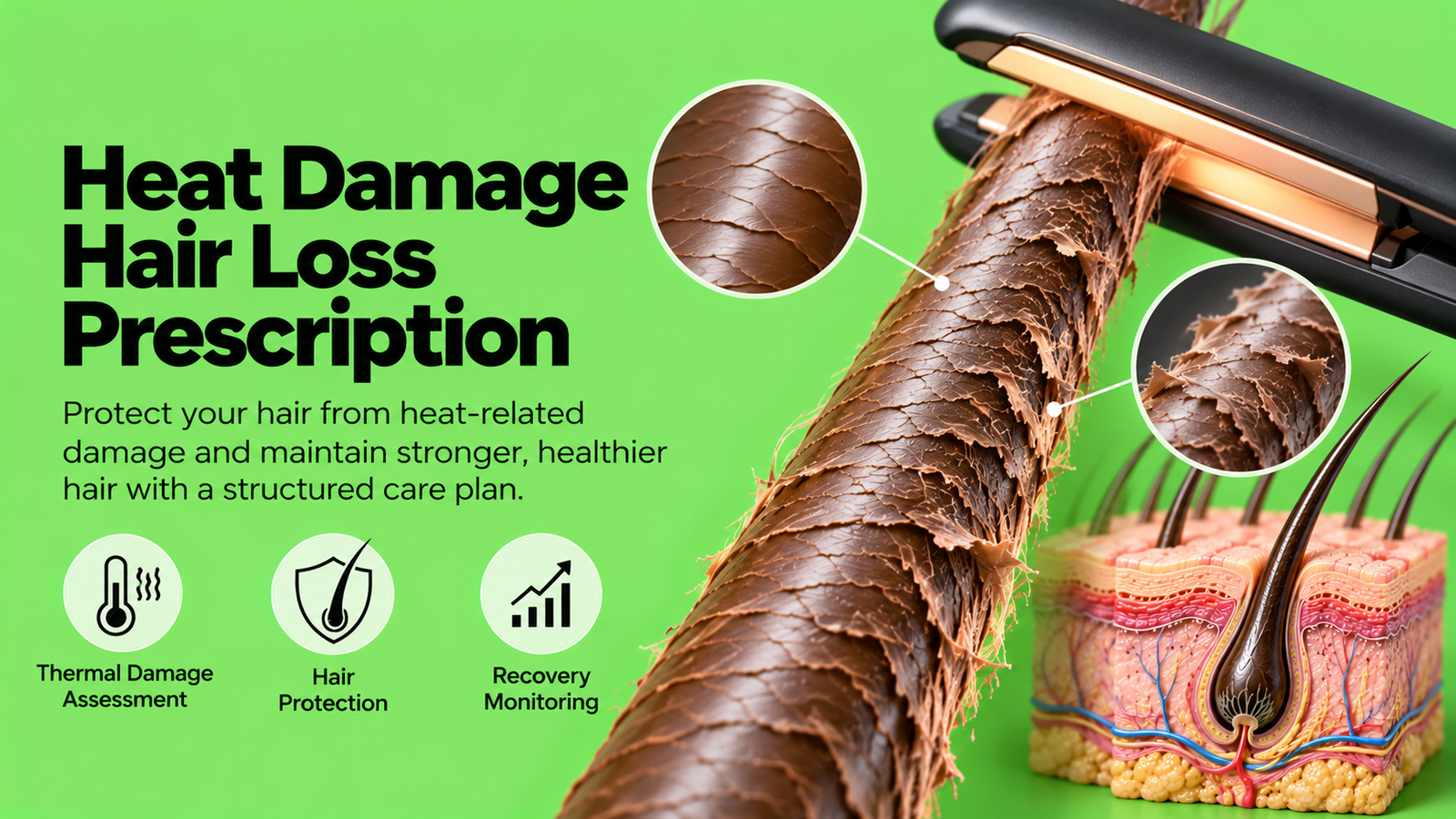
Frequent exposure to high temperatures from hair straighteners, curling irons, blow dryers and other styling tools can weaken hair fibres and cause breakage.
Patients often describe their hair as dry, rough, frizzy, brittle or thinner than before. Some notice numerous short broken strands during grooming.
However, thinning associated with excessive thermal styling does not always represent true hair loss from the follicles.
In many cases, the problem involves the structure of the visible hair shaft. Excessive heat can damage the cuticle and cortex, reducing the strength and flexibility of the hair fibre.
A Heat Damage Hair Loss Prescription should therefore distinguish external hair-shaft injury from actual follicular shedding, identify the extent of damage and determine whether medical treatment is necessary.
At Anagen Hair Transplant Clinic, Mumbai, the primary approach is to assess the cause of thinning before recommending medication, procedures or supportive hair care.
How Heat Can Damage the Hair Shaft
The visible hair shaft contains an outer protective cuticle and an internal cortex responsible for much of its strength and structure.
Repeated high-temperature exposure can affect moisture balance and damage structural components of the hair.
The severity of injury depends on the temperature, duration of exposure, frequency of styling and condition of the hair before heating.
Heat applied to damp or vulnerable hair can be especially damaging in certain circumstances. Severe thermal injury may produce structural abnormalities such as bubble hair, where cavities within the shaft contribute to fragility.
Once a hair shaft has sustained substantial structural damage, cosmetic products cannot completely rebuild it.
However, conditioning and protective care may reduce additional breakage while new hair grows.
Common Causes of Heat-Related Hair Damage
Hair Straighteners
Repeated high-temperature straightening may damage the cuticle and weaken the shaft, particularly when used frequently or on already compromised hair.
Blow Dryers
High heat, close contact and repeated prolonged drying can contribute to surface damage and brittleness.
The risk can be reduced by modifying heat exposure, drying distance and frequency.
Curling Irons and Hot Styling Tools
Curling irons and other heated appliances may cause localised or generalised shaft damage, particularly where heat is repeatedly applied to the same segment.
Heat Combined With Chemical Processing
Hair previously bleached, relaxed or chemically straightened may be more vulnerable to additional physical damage.
Patients with both exposures may benefit from reading the Chemical Damage Hair Loss Prescription.
Direct Thermal Injury to the Scalp
Accidental contact with a heated appliance may burn the scalp.
Significant burns can injure the skin and, if deep enough, may damage hair follicles.
This is distinct from ordinary heat-related hair-shaft breakage.
Hair Breakage vs True Follicular Hair Loss
Before prescribing treatment, the clinician should determine whether hair is breaking along the shaft or shedding from the follicle.
Features Suggesting Heat-Related Breakage
Hair may become rough, difficult to detangle or uneven in length.
The patient may notice short fragments rather than complete hairs.
Some strands may show split ends or other signs of fragility.
These features suggest hair-shaft damage rather than necessarily a follicular disorder.
Features Suggesting Follicular Shedding
Diffuse shedding of complete hairs, progressive widening of the parting or patterned thinning may indicate a separate diagnosis.
These findings require evaluation rather than assuming heat exposure is responsible.
The two problems may occur together.
When Thermal Damage Affects Follicles
Ordinary styling-related breakage usually affects the visible fibre, but a sufficiently deep thermal scalp injury can damage follicles and potentially produce scarring.
A burn accompanied by significant pain, blistering, open skin or persistent inflammation requires medical evaluation.
Diagnostic Assessment Before Prescription
Thermal Styling History
The clinician may review:
- Types of heat-styling devices used.
- Frequency of straightening, curling or blow drying.
- Whether hair is damp or dry during styling.
- Approximate heat setting and duration of exposure.
- Previous bleaching, colouring or chemical straightening.
- When hair dryness, brittleness or breakage began.
- Whether visible scalp irritation or burns have occurred.
- Whether there is additional root shedding or progressive density loss.
Hair and Scalp Examination
Assessment may include hair texture, length variation, fragility, broken fibres, scalp condition and follicular density.
Trichoscopy or microscopic inspection may assist where the nature of the damage is uncertain.
When Investigations Are Appropriate
Blood tests are not routinely required for isolated thermal shaft damage.
They may be considered when the history suggests nutritional deficiency, thyroid dysfunction, telogen effluvium or another systemic cause of true shedding.
Prescription Overview
Primary Concern: Dryness, brittleness, uneven hair length, breakage or thinning appearance following repeated thermal styling.
Possible Underlying Cause / Trigger: Frequent or excessive heat exposure from straighteners, curling irons, blow dryers or related appliances.
Assessment Required: Styling history, hair-shaft examination, scalp assessment and differentiation of breakage from follicular shedding.
Prescription Goal: Reduce further heat-related damage, protect remaining hair fibres, manage any diagnosed scalp injury and identify coexisting hair-loss disorders.
Possible Treatment Categories: Heat-exposure modification, supportive conditioning, treatment of diagnosed scalp inflammation or injury and separate management of any confirmed alopecia.
Supportive Hair / Scalp Care: Gentle cleansing, suitable conditioners, reduced heat exposure, minimal friction and careful detangling.
Monitoring: Reduction in breakage, scalp condition, visible quality of new growth and persistent thinning.
Follow-Up: Individualised according to severity, extent of thermal injury and suspected coexisting conditions.
When Referral / Further Investigation May Be Needed: Significant scalp burns, persistent inflammation, unexplained diffuse shedding, progressive patterned loss or suspected scarring.
When Another Hair-Restoration Treatment May Be Considered: Only when a separate follicular diagnosis or stable permanent injury justifies additional assessment.
Important: This page provides general prescription information and does not replace an individual medical assessment. The cause of hair loss should be confirmed before medicines, supplements or procedures are selected.
Prescription Management for Heat-Damaged Hair
1. Reduce Thermal Exposure
The most important intervention is to reduce repeated excessive heat.
Patients may benefit from less frequent heat styling, lower suitable temperature settings and avoiding prolonged direct contact with heated appliances.
Allowing hair to air dry partially where appropriate may reduce the need for prolonged blow drying.
2. Avoid Further Damage to Fragile Hair
Previously damaged strands are more vulnerable to additional mechanical and chemical injury.
Aggressive brushing, repeated bleaching or overlapping straightening procedures may worsen fragility.
3. Use Suitable Conditioning and Protective Care
Moisturising conditioners, selected leave-in products and appropriately used heat-protection products may reduce friction or limit additional damage during styling.
Such products cannot guarantee complete protection against high-temperature exposure.
4. Assess Scalp Injury Separately
Actual burns, significant dermatitis or another diagnosed scalp condition may require medical treatment.
Routine hair-growth medication is not indicated solely because a shaft has become dry or broken.
5. Allow Healthy New Hair to Grow
If follicles remain intact and damaging heat exposure is reduced, newly produced hair may develop without the same acquired thermal injury.
Older damaged lengths may require trimming as new hair grows.
Supportive Hair Care for Heat Damage
A supportive routine may include gentle washing, regular conditioning, careful detangling and reduced friction during drying.
A suitable Hair Conditioner or Hair Mask may improve manageability and help reduce additional breakage.
Selected Hair Serum products can help with cosmetic smoothness or detangling, but should not be described as regenerating the internal structure of an irreversibly damaged shaft.
The Hair Care Routine page can provide broader guidance on gentle everyday maintenance.
Monitoring and Realistic Hair Recovery
The primary measure of improvement is often reduced breakage and improved quality of newly produced hair rather than immediate thickening of existing damaged lengths.
Damaged hair fibres may appear smoother after conditioning, but the underlying structural changes cannot always be undone.
The time required for visibly healthier hair depends on hair length, growth rate, damage severity and continued styling practices.
If a patient continues losing full-length hairs or develops progressively reduced scalp density, another condition should be investigated.
When Another Hair-Loss Diagnosis Should Be Considered
Further evaluation is appropriate when thinning progresses despite reduced heat exposure, when there is significant full-hair shedding or when the scalp develops patchy loss or persistent inflammation.
Possible alternative diagnoses include telogen effluvium, androgenetic alopecia, nutritional disorders, scalp inflammation and alopecia areata.
The Chemical Damage Hair Loss Prescription may be relevant when chemical and thermal exposures occur together.
Are Hair-Growth Medicines, PRP or GFC Necessary?
Hair-growth medication does not fuse broken hair fibres or reconstruct thermally damaged cuticles.
PRP, GFC, iPRF and exosome procedures do not repair existing damaged shaft structures and should not be presented as standard treatment for isolated heat breakage.
Hair transplantation is inappropriate when the primary issue is external hair-fibre damage with intact follicles.
Medical or procedural treatment should be considered only for an independently established condition.
Frequently Asked Questions
Can hair straighteners cause hair loss?
Repeated high-temperature straightening can weaken strands and produce breakage. It does not necessarily mean follicles have been damaged.
Can heat permanently damage hair follicles?
Ordinary heat-related shaft breakage usually affects the visible fibre, but a significant thermal burn involving the scalp can injure follicles and potentially cause scarring.
Will broken hair grow back normally?
If follicles remain healthy and the damaging exposure is reduced, newly produced hair may grow without the same acquired damage.
Can conditioners permanently repair heat damage?
Conditioners can improve manageability and reduce further breakage, but cannot completely reconstruct a severely damaged hair shaft.
How can I reduce further heat damage?
Reduce frequency and intensity of heat styling, avoid prolonged direct exposure and use suitable gentle conditioning and styling practices.
Is heat damage the same as genetic hair loss?
No. Heat damage primarily affects hair-fibre structure, whereas androgenetic alopecia involves progressive changes in hair follicles.
Should I take hair-growth medicine for heat-damaged hair?
Not automatically. The need for medication depends on whether a separate hair-loss condition is diagnosed.
Heat Damage Hair Loss Consultation at Anagen, Mumbai
Apparent thinning after thermal styling should be assessed according to whether the primary problem is shaft fragility, scalp injury or true follicular hair loss.
A Hair Prescription Consultation at Anagen Hair Transplant Clinic can help identify the type of damage, recommend appropriate supportive care and determine whether additional clinical investigation is necessary.
Treatment should target the underlying problem rather than automatically relying on hair-growth procedures.