





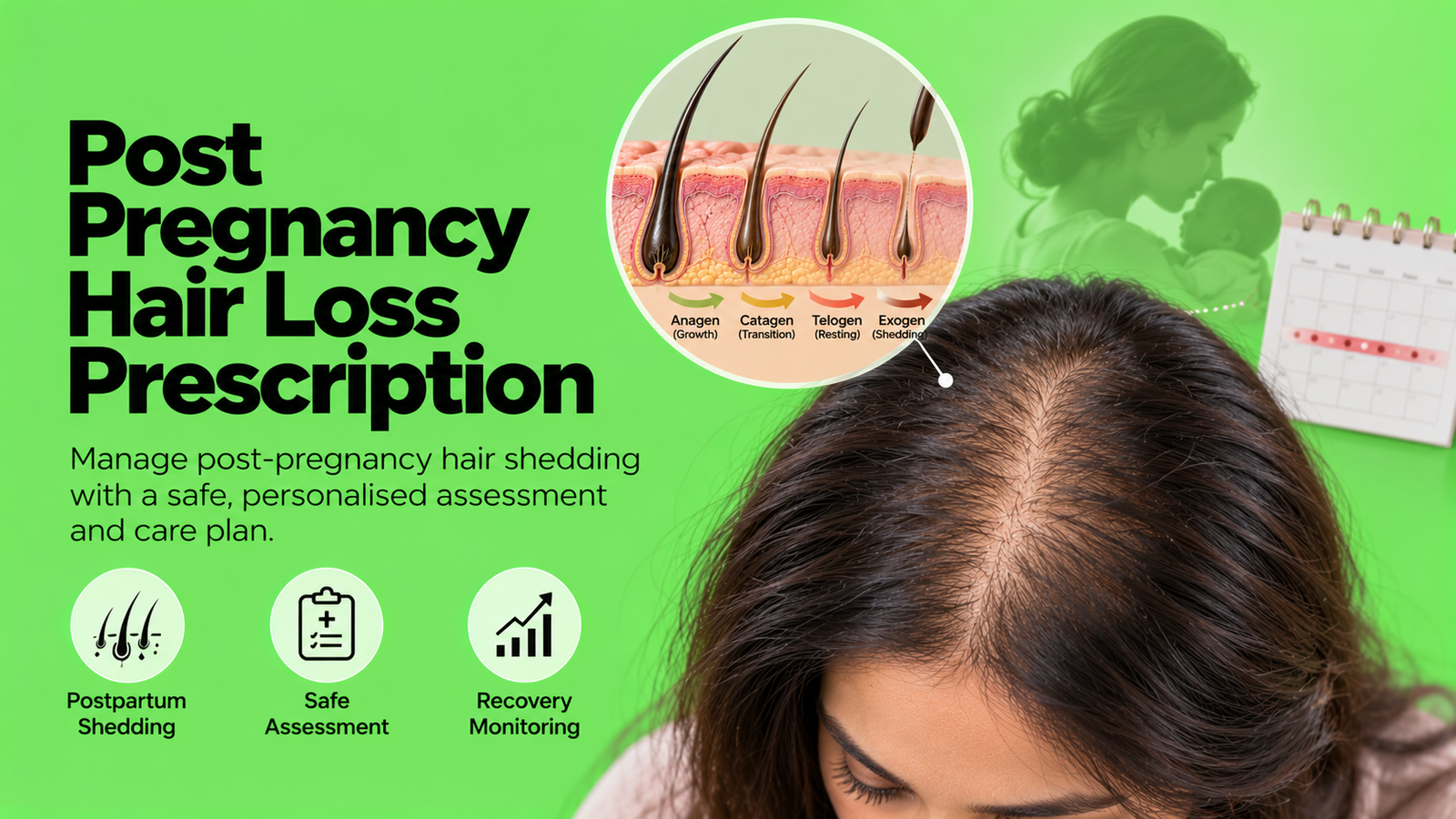
Post Pregnancy Hair Loss Prescription
Increased hair shedding after childbirth is common. Many women notice more hair while washing, brushing or styling during the months following delivery.
This can feel unexpected, especially if the hair appeared fuller during pregnancy. However, postpartum shedding often reflects a temporary change in the hair-growth cycle rather than permanent follicular loss.
A Post Pregnancy Hair Loss Prescription focuses on distinguishing expected postpartum shedding from hair loss that needs further medical assessment, while taking breastfeeding, postpartum recovery and reproductive safety into account.
At Anagen Hair Transplant Clinic, Mumbai, the first decision is whether medication is necessary at all. In an otherwise typical recovering postpartum shedding pattern, reassurance, observation and appropriate supportive care may be more suitable than immediate hair-growth medication.
Why Does Hair Fall Increase After Pregnancy?
During pregnancy, hormonal and hair-cycle changes may allow a greater proportion of scalp hairs to remain in the growing phase, making hair feel fuller in some women.
After delivery, changes in the hormonal environment can lead to more follicles entering the resting and shedding phases.
This can produce noticeable diffuse hair shedding several months after childbirth.
The condition is commonly described as postpartum telogen effluvium. It generally reflects a temporary shift in the hair cycle rather than damage to all the affected follicles.
Not every woman experiences the same degree of shedding, and the timing and recovery pattern vary.
What Does Typical Postpartum Shedding Look Like?
Postpartum shedding usually affects hair across the scalp rather than creating a sharply defined bald patch.
Some women notice a thinner ponytail, increased scalp visibility or shorter regrowing hairs around the frontal hairline during recovery.
Hair fall often becomes noticeable a few months after delivery and may be particularly apparent around the third or fourth postpartum month. In many cases it gradually improves over the following months, although individual recovery varies.
Persistent loss, progressive widening of the central part, focal bald areas or significant scalp inflammation should not automatically be attributed to childbirth.
How Does the Doctor Assess Post Pregnancy Hair Loss?
The clinician may ask when shedding started in relation to delivery, whether it is improving, and whether any unusual symptoms or additional hair-loss concerns are present.
Relevant history may include breastfeeding, recent illness, blood loss during delivery, recovery from childbirth, dietary restrictions, medication use, significant weight changes and relevant previous hair-loss history.
The scalp examination may look for diffuse shedding, progressive miniaturisation, patchy hair loss or scalp inflammation.
Blood investigations are not required automatically after childbirth. Testing may be appropriate when the clinical history suggests iron deficiency, thyroid dysfunction or another medical cause.
For example, substantial delivery-related blood loss or symptoms of anaemia may justify further assessment. A clinician may also consider postpartum thyroid disease when relevant symptoms are present.
Prescription Overview
Primary Concern: Increased scalp-hair shedding following pregnancy and childbirth.
Assessment Focus: Postpartum timing, shedding pattern, recovery, breastfeeding status and features suggesting another diagnosis.
Possible Contributing Factors: Postpartum hair-cycle changes, telogen effluvium, relevant nutritional deficiency, thyroid dysfunction or previously existing female pattern hair loss.
Prescription Goal: Identify when recovery is expected, treat confirmed contributing conditions where necessary and avoid unnecessary medication.
Possible Prescription Categories: Observation and follow-up, correction of medically established contributors, scalp-directed treatment when indicated and selected hair-growth therapy only after safety review.
Supportive Care: Nutritionally adequate meals, gentle hair handling and appropriate postpartum health care.
Monitoring: Changes in shedding, density recovery, symptoms and any relevant investigation findings.
Follow-Up: Based on the severity, duration, recovery pattern and clinical findings.
Pregnancy / Breastfeeding Considerations: Central to all medication and procedure decisions.
When Further Investigation May Be Needed: Severe, prolonged or atypical shedding; systemic symptoms; progressive central thinning; patchy loss; scalp inflammation; or incomplete recovery.
When Another Treatment May Be Considered: Diagnosis-specific treatment for an overlapping condition rather than routine postpartum procedures.
This page provides general prescription information and does not replace an individual clinical assessment. Treatment should be selected according to the diagnosis, medical history, reproductive status where relevant, examination and treatment goals.
Does Post Pregnancy Hair Loss Always Require Medicine?
No.
When the clinical presentation is consistent with uncomplicated temporary postpartum shedding, additional medication may not be necessary.
Management may focus on explaining the hair-cycle change, documenting the concern, encouraging adequate nutrition and arranging reassessment if the shedding persists or changes.
Prescription treatment becomes more relevant when a separate treatable medical condition is identified or another hair-loss diagnosis is present.
A treatment plan should not be based solely on the number of hairs seen during washing.
What May Be Included in a Post Pregnancy Hair Loss Prescription?
1. Observation and Reassurance
If the pattern is consistent with expected postpartum shedding and there are no concerning findings, observation may be the most appropriate approach.
The clinician may explain the expected general course and provide guidance on what changes should prompt further review.
2. Treatment of a Confirmed Nutritional Problem
Postpartum nutritional requirements can be influenced by recovery, diet and breastfeeding.
If a relevant deficiency is diagnosed, appropriate nutritional or medical treatment may be recommended. Routine iron, vitamin or high-dose supplement prescriptions should not be given to every postpartum patient without a clinical basis.
3. Management of an Identified Medical Condition
When thyroid disease, significant anaemia or another condition contributes to shedding, management should address that condition through the appropriate clinician.
Hair recovery may follow improvement of the underlying medical problem, but not necessarily immediately.
4. Treatment of Coexisting Hair or Scalp Disease
If evaluation suggests female pattern hair loss, alopecia areata, inflammatory scalp disease or another condition, a separate diagnosis-led treatment plan may be necessary.
5. Hair-Growth Medication Only When Appropriate
Hair-growth medicines are not routinely required for uncomplicated postpartum shedding.
Minoxidil and other hair-loss medications require particular caution during breastfeeding and pregnancy planning. The patient’s circumstances and current medication-safety evidence must be reviewed before any treatment is considered.
Breastfeeding and Treatment Safety
Breastfeeding changes the risk-benefit assessment of many medicines and some procedures.
Patients should disclose whether they are breastfeeding, planning another pregnancy or taking postpartum medications and supplements.
Minoxidil is generally advised against during breastfeeding in dermatology patient guidance. Anti-androgen medications can have important reproductive restrictions.
A clinician should review any proposed medication rather than assuming that topical therapy or regenerative procedures are automatically safe.
Postpartum Shedding Versus Female Pattern Hair Loss
Postpartum telogen effluvium is associated with a temporary change in hair cycling following delivery.
Female pattern hair loss is a different condition involving progressive follicular miniaturisation. Both may coexist.
In some women, postpartum shedding makes previously subtle pattern thinning more noticeable. If the central part continues to widen or density does not recover as expected, a clinician may investigate for female pattern loss rather than assuming recovery will occur without additional evaluation.
The broader causes of temporary diffuse shedding are addressed in the planned Telogen Effluvium Prescription page.
Recovery, Monitoring and Long-Term Hair Care
Postpartum shedding frequently settles as the hair cycle readjusts, but visible recovery varies between women.
Monitoring should consider whether shedding is decreasing, whether shorter regrowing hairs are appearing and whether scalp coverage is gradually improving.
Gentle styling, avoiding tight hairstyles and reducing unnecessary chemical or thermal damage can help protect existing hair.
When shedding remains substantial, is associated with systemic symptoms or has not recovered as expected, medical reassessment is warranted. Persisting loss near or beyond the first postpartum year deserves particular attention rather than repeated reassurance without examination.
Are PRP, GFC or Hair Transplantation Necessary?
Routine PRP, GFC, exosome or other invasive treatment is not an established requirement for otherwise uncomplicated postpartum shedding.
Procedures should not replace assessment for a medical problem or be promoted merely because the patient has recently delivered.
Hair transplantation is not an appropriate default treatment for expected temporary postpartum shedding. If an independent, stable structural hair-loss condition is subsequently diagnosed, its management and suitability for restoration can be assessed separately.
Frequently Asked Questions
1. Why does hair fall increase after pregnancy?
Hair-cycle changes associated with pregnancy and childbirth can cause more follicles to enter a shedding phase after delivery.
2. Is postpartum shedding permanent?
In many women it is temporary, but persistent or atypical loss can indicate an additional condition requiring assessment.
3. How long does postpartum hair shedding continue?
The onset and recovery vary. Shedding often appears several months after delivery and improves gradually, although some women need further evaluation when recovery is delayed.
4. Is treatment safe while breastfeeding?
Safety depends on the specific treatment. Some common hair-loss medications should be avoided during breastfeeding, so clinical review is necessary.
5. Does every postpartum patient need iron or vitamin supplements?
No. Nutritional assessment and treatment should reflect individual needs and confirmed or clinically suspected deficiencies.
6. Can postpartum shedding reveal female pattern hair loss?
Yes, it can make underlying pattern thinning more apparent in some women. The two conditions require different management.
7. When should I consult a doctor?
Assessment is especially useful when shedding is severe, prolonged, patchy, associated with scalp or systemic symptoms, or not recovering as expected.
Get Post Pregnancy Hair Loss Assessed at Anagen
Postpartum shedding often requires a different approach from chronic female pattern thinning. Medical evaluation is particularly useful when the loss is severe, prolonged, associated with other symptoms or not improving as expected.
Anagen’s Hair Prescription Consultation can help determine whether observation, medical investigation, breastfeeding-compatible care or treatment of another hair-loss condition is appropriate.