





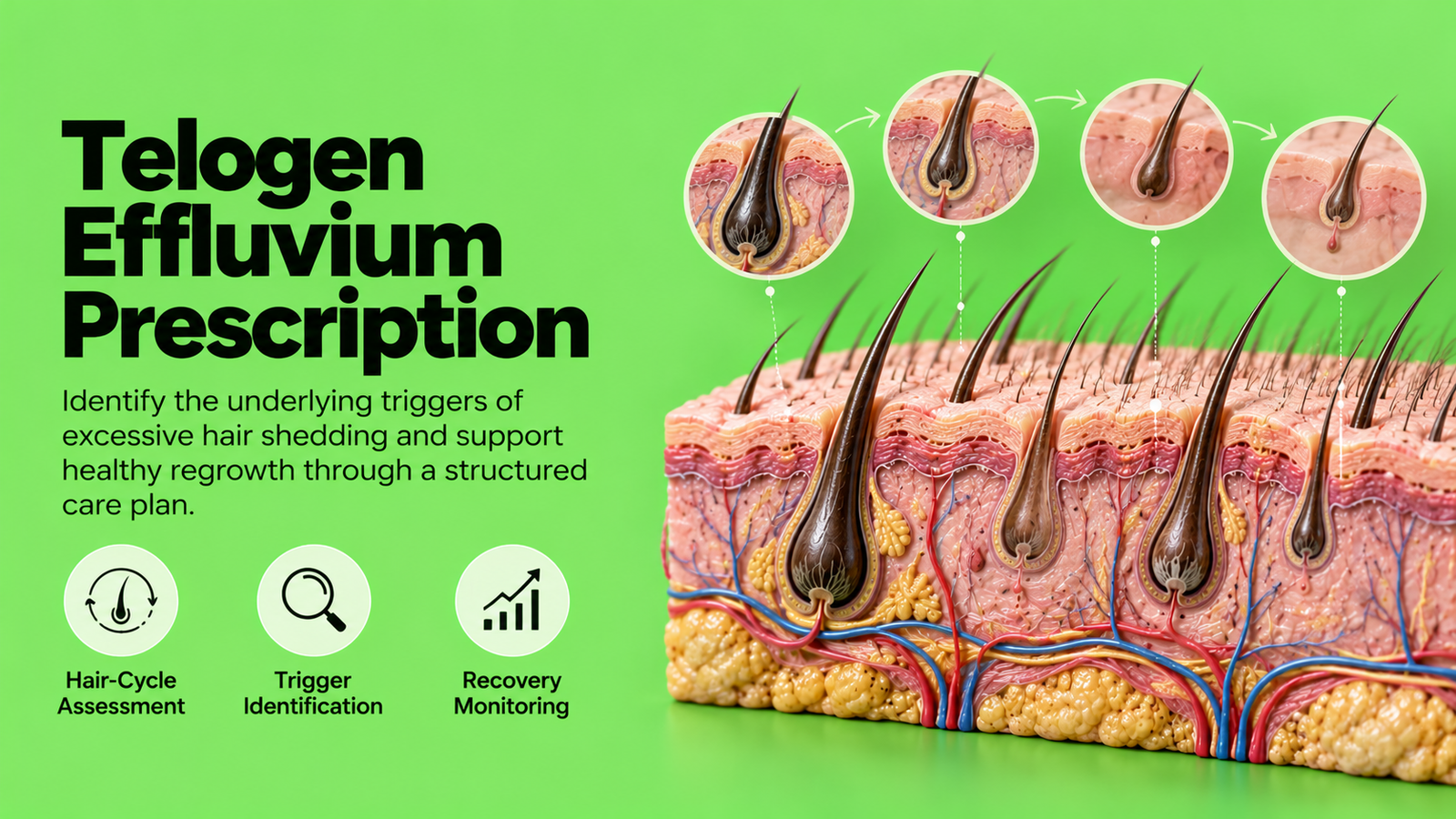
Telogen Effluvium Prescription
Telogen effluvium is a form of increased hair shedding in which more hairs than usual enter the resting phase of the hair-growth cycle.
Patients commonly notice hair collecting during washing, brushing or daily grooming. The shedding may appear sudden, even when the event responsible occurred weeks or months earlier.
Telogen effluvium is generally a non-scarring condition, meaning the hair follicles are usually preserved. However, the duration and extent of recovery depend on the trigger, whether it remains active and whether another hair-loss condition coexists.
A Telogen Effluvium Prescription should therefore focus on identifying the likely trigger, assessing scalp health, addressing contributing causes and monitoring recovery.
Understanding the Hair Cycle in Telogen Effluvium
Scalp hair normally cycles through growth, transition and resting phases.
In telogen effluvium, a physiological or medical disturbance can lead to an increased number of follicles entering the resting phase. Those hairs are subsequently shed, producing noticeable diffuse hair fall.
The delayed relationship between the trigger and shedding is important.
A patient who develops increased shedding today may need to review relevant illness, surgery, childbirth, weight change, medication exposure or major stress from preceding months.
Not every patient will identify a single definite trigger.
Common Triggers of Telogen Effluvium
Telogen effluvium can follow several physical, medical or psychological events.
Recognised triggers include significant febrile illness, surgery, childbirth, rapid weight loss, inadequate nutrition, major emotional stress, some medications and certain systemic illnesses.
Thyroid dysfunction or iron deficiency may also be relevant in selected cases.
Because the causes are diverse, the prescription should not be chosen solely on the basis of how much hair is falling.
Acute and Persistent Shedding
Acute telogen effluvium often follows an identifiable event and may improve once the disturbance has resolved.
When shedding continues or fluctuates for a prolonged period, the clinician should reconsider ongoing triggers, overlapping conditions and the possibility of chronic telogen effluvium or another diagnosis.
Diagnostic Assessment Before Prescription
The clinician must first establish whether the reported shedding is consistent with telogen effluvium.
Hair-Loss History
Assessment may include the date shedding became noticeable, previous episodes, recent illness or surgery, childbirth, medication changes, diet, weight changes and significant stress.
Other questions may address family history of pattern hair loss, menstrual history where relevant, scalp symptoms and associated medical conditions.
Scalp and Hair Examination
The clinician may evaluate diffuse density changes, follicular openings, shaft calibre and visible miniaturisation.
A hair-pull test or trichoscopy may support the assessment where appropriate.
True diffuse shedding must also be distinguished from excessive breakage caused by grooming, bleaching or heat styling.
Investigations
Not every patient with telogen effluvium requires the same blood tests.
Relevant laboratory assessment may be considered when history or examination suggests anaemia, nutritional deficiency, thyroid dysfunction or another systemic issue.
Prescription Overview
Primary Concern: Increased diffuse shedding consistent with a possible telogen hair-cycle shift.
Possible Underlying Cause / Trigger: Recent illness, surgery, childbirth, nutritional disturbance, medication, psychological stress, systemic disease or another physiological trigger.
Assessment Required: Timeline of shedding, medical history, scalp examination and targeted investigations where indicated.
Prescription Goal: Confirm the shedding disorder, identify and address contributing triggers and support natural follicular recovery.
Possible Treatment Categories: Trigger correction, treatment of underlying illness, nutritional support where required, scalp-disorder management and selected treatment for coexisting alopecia.
Supportive Hair / Scalp Care: Gentle washing and detangling, balanced nutrition and avoidance of excessive traction or harsh cosmetic processing.
Monitoring: Shedding pattern, underlying medical condition, visible regrowth and scalp density.
Follow-Up: Based on severity, duration, continuing triggers and clinical findings.
When Referral / Further Investigation May Be Needed: Persistent or atypical loss, systemic symptoms, uncertainty about medication effects or signs of another alopecia.
When Another Hair-Restoration Treatment May Be Considered: When a separate persistent diagnosis is identified and evaluated independently.
Important: This page provides general prescription information and does not replace an individual medical assessment. The cause of hair loss should be confirmed before medicines, supplements or procedures are selected.
Prescription Management for Telogen Effluvium
1. Identify and Address the Trigger
Where a trigger is identifiable, management should prioritise the underlying issue.
For example, thyroid dysfunction requires medical management, nutritional deficiency may require appropriate correction and medication-related shedding requires review with the prescribing physician.
2. Avoid Unnecessary Hair-Growth Medication
Not every patient with acute telogen effluvium requires pharmacological treatment.
When shedding is self-limited and the underlying trigger has resolved, observation and supportive care may be appropriate.
Hair-growth medications may be considered in selected circumstances, particularly where another alopecia coexists, but should not automatically be prescribed to everyone with diffuse shedding.
3. Manage Scalp Conditions Separately
Itching, scaling, significant dandruff, redness or inflammation may warrant separate treatment.
4. Review Persistent Shedding
If shedding continues, the diagnosis should be revisited. A patient may have ongoing telogen effluvium, female or male pattern hair loss, diffuse alopecia areata or another disorder.
Supportive Hair and Scalp Care
Patients can continue appropriate routine washing. Hair cleaning does not cause telogen effluvium, although already detached hairs may become more visible during washing.
Gentle detangling, adequate nutrition and avoidance of unnecessary traction or harsh processing may help minimise additional shaft damage.
Excessive counting of individual hairs is not always useful. Consistent follow-up observations may provide more meaningful information than reacting to daily variations.
The Hair Fall Control Prescription and Hair Care Routine pages can offer additional supportive guidance.
Monitoring and Realistic Recovery
Follicles are generally preserved in uncomplicated telogen effluvium, so improvement is often possible when contributing causes resolve.
However, visible density may recover later than the reduction in shedding. Recovery is not always linear, and some patients experience prolonged or recurrent episodes.
Follow-up should evaluate the trend in shedding, possible regrowth, scalp findings and whether a persistent underlying trigger remains.
Telogen Effluvium vs Other Hair-Loss Conditions
Telogen effluvium produces increased shedding, whereas androgenetic alopecia is characterised by progressive follicular miniaturisation.
The two can coexist. A shedding episode may make pre-existing pattern hair loss more noticeable.
The Stress Related Hair Loss Prescription addresses stress as a possible trigger, whereas this page focuses on the diagnosed hair-cycle condition itself.
Other related pages include Thyroid & Hair Loss Prescription, Vitamin Deficiency Hair Loss Prescription and Post Pregnancy Hair Loss Prescription.
Are PRP, GFC or Hair Transplantation Required?
PRP, GFC and similar treatments are not routine first-line therapy for uncomplicated telogen effluvium.
Hair transplantation is generally inappropriate for active temporary diffuse shedding when follicles remain viable.
Procedural treatment should only be assessed when there is a separate clinical indication.
Frequently Asked Questions
What triggers telogen effluvium?
Possible triggers include illness, surgery, childbirth, major stress, rapid weight loss, nutritional deficiency and certain medications.
Why does shedding start after the triggering event?
Hair-cycle changes can occur before the affected hairs are shed, producing a delay between the event and visible hair fall.
Does telogen effluvium cause permanent baldness?
Uncomplicated telogen effluvium is non-scarring and often improves, but persistent thinning requires assessment for other causes.
How long does shedding continue?
The duration varies according to whether the trigger has resolved and whether other medical or hair-loss conditions are present.
Can telogen effluvium occur with pattern hair loss?
Yes. Diffuse shedding and progressive follicular miniaturisation may occur together.
Should every patient receive PRP or hair-growth medication?
No. Treatment should be selected according to the diagnosis, severity and presence of any coexisting disorder.
Telogen Effluvium Prescription Consultation at Anagen, Mumbai
Managing telogen effluvium begins with understanding why the shedding started and whether the trigger is still present.
A Hair Prescription Consultation at Anagen Hair Transplant Clinic can help distinguish telogen effluvium from patterned thinning, nutritional concerns, systemic causes and other hair-loss disorders.
The prescription plan should follow the diagnosis, not the quantity of shed hair alone.