





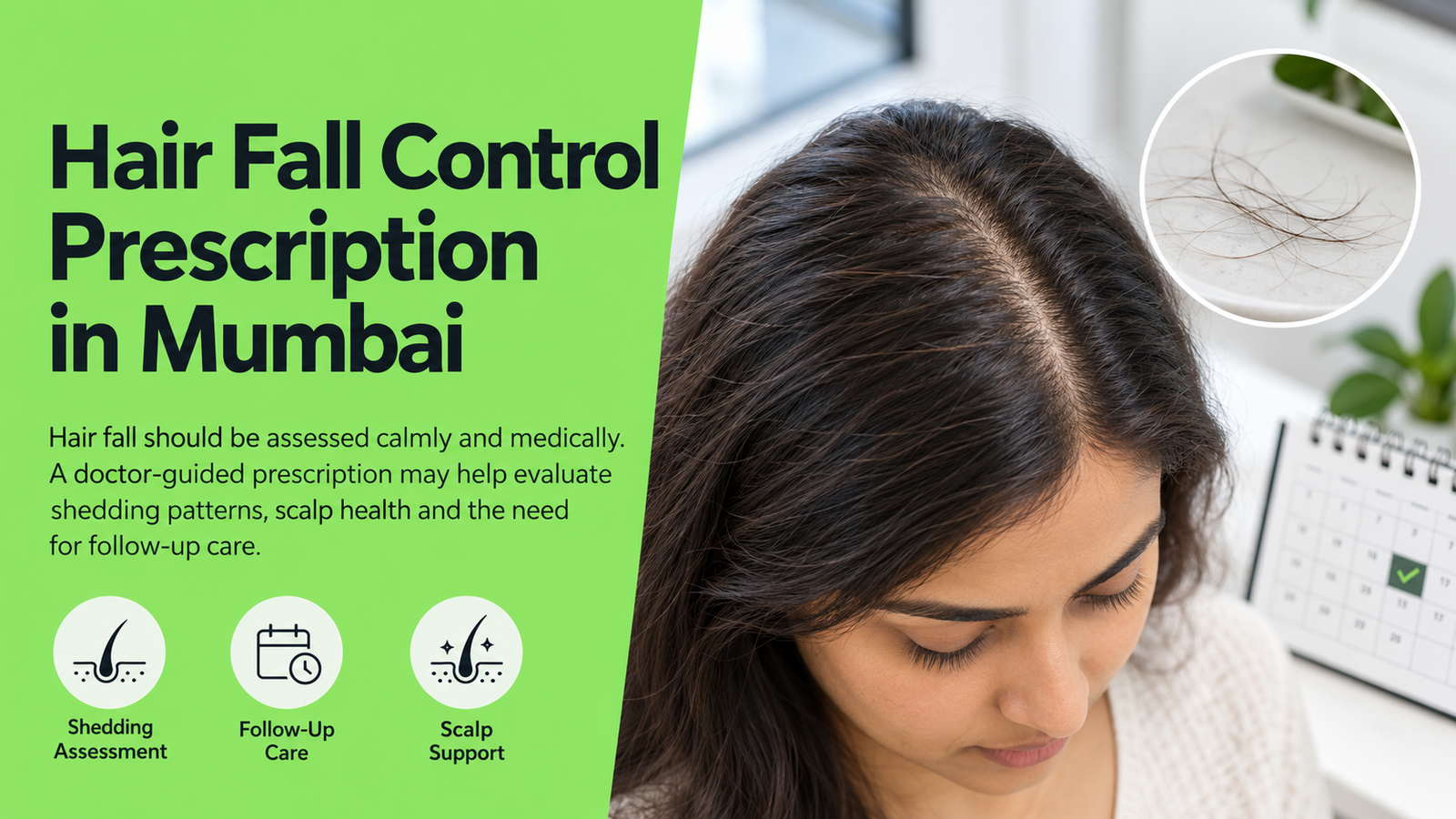
Hair Fall Control Prescription in Mumbai
Hair shedding is a normal part of the hair-growth cycle. However, some patients notice more hair on their pillow, in the shower, during combing or after washing than they previously experienced.
Increased hair fall may occur after illness, physical or emotional stress, nutritional changes, medication exposure, childbirth or certain medical conditions. It may also occur alongside progressive pattern hair loss.
A Hair Fall Control Prescription focuses on identifying why shedding has increased and selecting appropriate medical management when treatment is needed.
At Anagen Hair Transplant Clinic, Mumbai, the approach begins with a history of the shedding pattern, examination of scalp and hair density, and assessment for relevant underlying causes.
Not all hair shedding requires medication. Some episodes are temporary and may improve after the triggering factor resolves.
The objective is not to promise that every shed hair can be prevented, but to identify abnormal shedding, manage treatable causes and monitor recovery or progression.
Understanding Hair Fall and When Prescription Treatment Is Needed
Hair shedding is a normal part of the hair-growth cycle. However, some patients notice more hair on their pillow, in the shower, during combing or after washing than they previously experienced.
Increased hair fall may occur after illness, physical or emotional stress, nutritional changes, medication exposure, childbirth or certain medical conditions. It may also occur alongside progressive pattern hair loss.
A Hair Fall Control Prescription focuses on identifying why shedding has increased and selecting appropriate medical management when treatment is needed.
At Anagen Hair Transplant Clinic, Mumbai, the approach begins with a history of the shedding pattern, examination of scalp and hair density, and assessment for relevant underlying causes.
Not all hair shedding requires medication. Some episodes are temporary and may improve after the triggering factor resolves.
The objective is not to promise that every shed hair can be prevented, but to identify abnormal shedding, manage treatable causes and monitor recovery or progression.
Is Daily Hair Shedding Normal?
Hair naturally cycles through growth, resting and shedding phases.
Shedding approximately 50–100 scalp hairs per day is commonly cited as a general reference, although individual variation, hair-washing frequency, hair length and grooming habits can influence what a patient notices.
Seeing shed hairs does not automatically indicate progressive baldness.
The more useful clinical questions are whether shedding has increased substantially from the patient’s usual pattern, how long the change has been present and whether visible thinning is developing.
Some patients experience excessive shedding without permanent follicular loss. Others develop progressive thinning associated with follicular miniaturisation.
These situations require different management.
What Can Cause Increased Hair Fall?
Hair fall is a symptom rather than a single diagnosis.
1. Telogen Effluvium
Telogen effluvium commonly produces increased shedding after a significant physical or physiological trigger.
Potential triggers include illness, fever, major surgery, childbirth, substantial dietary change and significant stress.
Shedding may become noticeable after a delay rather than immediately following the triggering event.
Many cases improve once the underlying trigger resolves, although persistent shedding requires further assessment.
The dedicated Telogen Effluvium Prescription page should address this condition in greater detail.
2. Androgenetic Alopecia
Male and female pattern hair loss can gradually reduce density through follicular miniaturisation.
Some patients notice increased shedding, while others mainly notice thinning of the frontal scalp, widening parting or crown.
Treatment depends on the diagnosis and individual prescribing considerations.
3. Thyroid and Hormonal Conditions
Thyroid disorders and certain other hormonal conditions may contribute to altered hair growth or shedding.
Testing is guided by relevant symptoms, history and clinical examination.
The appearance of hair fall alone does not establish an endocrine diagnosis.
4. Nutritional Deficiency
Relevant deficiencies may contribute to hair shedding in selected patients.
Dietary history, medical factors and clinically indicated investigations help determine whether correction is required.
Routine supplements are not a substitute for diagnosing the actual cause of hair loss.
5. Postpartum Hair Shedding
Increased shedding may occur after childbirth because of changes in the hair-growth cycle associated with hormonal shifts.
It is often temporary, although persistent or unusual shedding may require assessment.
6. Medications or Systemic Illness
Certain medicines, significant illness and medical treatments can affect hair cycling.
Patients should not stop a prescribed medicine because they suspect it is causing hair loss without discussing the concern with the treating clinician.
7. Scalp Inflammation and Dermatological Disease
Scalp infections, inflammatory conditions and some autoimmune or scarring alopecias may contribute to shedding or hair loss.
Symptoms such as persistent pain, scaling, pustules, redness or patchy loss may require prompt evaluation.
How Doctors Assess Excessive Hair Fall
Clinical evaluation begins by understanding the shedding history.
The doctor may ask about:
- The date when increased shedding began.
- Whether the onset was sudden or gradual.
- Recent illness, fever, surgery or significant stress.
- Childbirth or hormonal changes where relevant.
- Dietary changes and weight loss.
- Medicines or supplements started or stopped.
- Family history of pattern hair loss.
- Scalp itching, scaling or pain.
- Any associated eyebrow or body-hair loss.
- Previous hair-loss treatment.
Scalp examination may assess visible density, miniaturisation, hair breakage, patchy loss and inflammation.
A hair-pull test or trichoscopic examination may be useful in selected cases.
Blood tests are chosen according to the suspected cause rather than performed universally.
Prescription Overview
Primary Concern: Increased hair shedding, ongoing hair fall or unexplained changes in the usual shedding pattern.
Assessment Required: Onset, duration, triggering factors, scalp examination, density changes, medical history and clinically indicated investigations.
Prescription Goal: Identify and manage the underlying cause, reduce abnormal shedding where possible and preserve existing hair coverage.
Possible Prescription Categories: Diagnosis-specific hair-loss medication, treatment of medical or scalp disorders and correction of confirmed deficiencies.
Supportive Care: Gentle grooming, appropriate scalp care, adequate nutrition and management of relevant external triggers.
Monitoring: Shedding pattern, hair density, progression of thinning, adverse effects and recovery over time.
Follow-Up: Determined by diagnosis, clinical course and treatment.
When Another Treatment May Be Considered: Persistent or progressive hair loss despite appropriate evaluation, significant follicular miniaturisation or structural loss requiring a different management pathway.
Important: This page provides general prescription information and does not replace an individual clinical assessment. The medicine, dose, frequency and duration, where required, should be selected according to the diagnosis, medical history and clinical findings.
What Prescription Treatment May Help Control Hair Fall?
The correct prescription depends on why shedding is occurring.
1. Management of Temporary Telogen Shedding
When hair shedding follows a temporary trigger, management may focus on recovery, correcting an identified contributing factor and observation.
Specific hair-growth medication is not automatically required for every case.
2. Medication for Pattern Hair Loss
Where increased shedding is associated with diagnosed pattern hair loss, suitable topical or oral treatment may be considered.
The type of medicine depends on the patient’s diagnosis, general health and relevant sex-specific or reproductive considerations.
3. Correction of an Underlying Medical Condition
Treatment of relevant thyroid disease, nutritional deficiency or another diagnosed condition may be important.
Hair shedding may not resolve immediately after the underlying condition is corrected because the hair-growth cycle requires time to recover.
4. Treatment of Scalp Disease
When inflammation, infection or another scalp disorder contributes to hair loss, management should address that condition directly.
5. Review of Medication-Associated Shedding
If a medicine is suspected as a contributor, the prescribing doctor may review its suitability, possible alternatives and the risks of changing treatment.
Patients should not independently discontinue important prescribed medicines.
How Should Hair Fall Be Monitored?
Counting every shed hair is not necessary for every patient and may be unreliable because washing frequency, hair length and collection methods vary.
A clinical follow-up may focus on:
- Whether shedding is noticeably returning toward the patient’s usual pattern.
- Changes in visible density or parting width.
- Development of new localized hair-loss areas.
- Evidence of follicular miniaturisation.
- Progression or control of scalp disease.
- Treatment adherence and adverse effects.
Consistent clinical photographs can support monitoring.
The appropriate method depends on the diagnosis, and short-term fluctuation should not automatically be interpreted as treatment failure.
When Does Hair Fall Require Further Investigation?
Additional evaluation may be appropriate if shedding is persistent, rapidly progressive or associated with other concerning changes.
Examples include sudden large patches, scalp pain, visible scarring, pustules, marked inflammation, significant systemic symptoms or progressive reduction in density.
Some patients have both temporary increased shedding and underlying pattern hair loss. Treating one condition may not fully address the other.
Hair transplantation is not a routine treatment for active shedding.
It may be considered later for suitable patients with stable structural hair loss, after the underlying diagnosis has been established.
Realistic Expectations and Maintenance
Hair fall does not always stop immediately after treatment begins.
When shedding is related to a reversible trigger, recovery may occur gradually. When progressive pattern hair loss is also present, longer-term medication may be needed.
In some conditions, the aim is to reduce the rate of future loss rather than eliminate normal daily shedding.
A prescription should be reviewed when the diagnosis, symptoms or treatment response changes.
No medicine can guarantee zero shedding or prevent every form of hair loss.
Frequently Asked Questions
1. How much hair fall is normal?
Daily shedding is a natural part of hair cycling. Approximately 50–100 hairs per day is a commonly quoted reference, but individual circumstances vary.
2. Why has my hair fall suddenly increased?
Recent illness, significant stress, childbirth, dietary changes, medicines and other factors can contribute to increased shedding. Examination helps identify the likely cause.
3. Can one medicine stop all hair fall?
No. Hair fall can arise from different medical and biological causes, and treatment must be diagnosis-specific.
4. Are blood tests always necessary?
No. Testing depends on medical history, associated symptoms and clinical findings.
5. How long does excessive shedding take to reduce?
That depends on the cause. Some temporary forms improve gradually after the trigger resolves, while progressive disorders may need ongoing management.
6. Can hair fall occur even if I am taking hair-growth medicine?
Yes. Normal shedding continues, and underlying disease, temporary triggers or medication-related changes can affect shedding. Persistent concerns need reassessment.
7. When should I consult a doctor for hair fall?
Seek assessment for sudden or marked shedding, patchy loss, persistent worsening, scalp inflammation or visible progressive thinning.
Hair Fall Control Prescription Consultation at Anagen, Mumbai
Hair fall is a symptom with multiple possible causes. Selecting treatment without understanding the reason for shedding may delay appropriate care.
A doctor-guided assessment can help determine whether observation, disease-specific medication, correction of an underlying condition or another management strategy is appropriate.
Arrange a Hair Prescription Consultation
Discuss persistent or unusual shedding and obtain an individualized clinical assessment.