





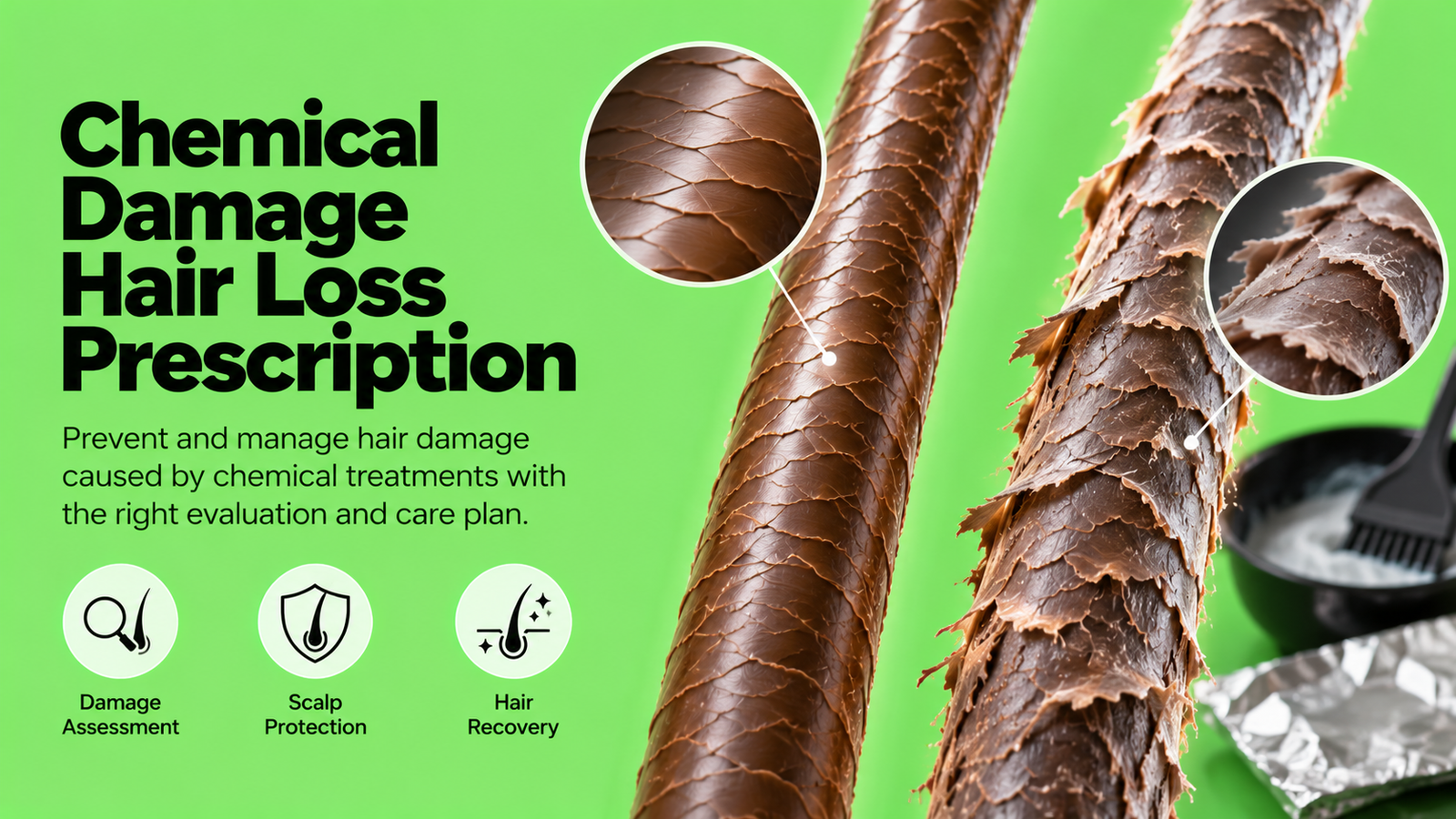
Chemical Damage Hair Loss Prescription
Hair that becomes dry, brittle, weak or excessively broken after colouring, bleaching, straightening, relaxing or other chemical procedures may have sustained damage to the hair shaft.
However, not every case of thinning after a salon treatment represents actual hair loss from the roots.
In many patients, the primary problem is hair-shaft breakage, where damaged strands fracture along their length while the hair follicle remains capable of producing new hair.
In other patients, chemical exposure may cause scalp irritation, contact dermatitis or, occasionally, a more serious chemical injury. Severe injury can potentially damage follicles and lead to permanent hair loss.
A Chemical Damage Hair Loss Prescription should therefore begin by establishing whether the problem involves hair-shaft damage, scalp inflammation, true follicular shedding or a combination of these conditions.
At Anagen Hair Transplant Clinic, Mumbai, the objective is to identify the type and extent of damage before recommending scalp medication, hair-care modifications or any hair-restoration treatment.
How Chemical Hair Treatments Can Damage Hair
The visible hair shaft is composed primarily of keratin and includes an outer cuticle and internal cortex.
The cuticle forms a protective surface, while the cortex contributes substantially to hair strength, structure and elasticity.
Chemical procedures such as bleaching, colouring, perming and relaxing modify components of the hair fibre to achieve a desired cosmetic result.
Repeated or excessive processing can weaken the hair shaft, affect cuticle integrity and reduce resistance to mechanical breakage.
The resulting hair may look frizzy, rough, thin or uneven in length.
Chemical hair treatments do not necessarily destroy the follicles beneath the scalp. The distinction between damaged existing hair and damaged follicular structures is central to assessment.
Hair Breakage vs Hair Loss From the Roots
One of the most important questions during evaluation is:
Is the hair shaft breaking, or is the hair being shed from the follicle?
Hair-Shaft Breakage
With shaft damage, hair fibres may break at different points along their length.
Patients may notice uneven hair lengths, increased frizz, split ends, short broken fragments and an apparent loss of thickness.
The follicles may remain intact and continue producing new hair.
True Follicular Hair Loss
True hair shedding involves the release of hairs from follicles as part of a hair-cycle disorder or another scalp condition.
It may produce diffuse shedding, patterned thinning or patchy hair loss depending on the cause.
The presence of chemical damage does not rule out a second diagnosis such as telogen effluvium or androgenetic alopecia.
Chemical Injury to the Scalp
Chemical exposure can also injure the skin.
Symptoms such as severe burning, persistent redness, blistering, ulceration, discharge or pain require prompt medical evaluation. A suspected active chemical burn requires immediate removal of the offending exposure and appropriate first aid, including thorough irrigation with water when indicated, rather than continued cosmetic treatment.
Severe or deep injuries can occasionally result in scarring and permanent follicular damage.
Common Chemical Exposures That May Cause Hair Damage
Hair Bleaching
Bleaching changes hair pigment through oxidation and can also weaken structural components of the hair shaft.
Repeated bleaching or overlapping application may increase the risk of breakage.
Hair Colouring
Hair colouring can affect fibre condition, particularly when repeated processing occurs on previously damaged lengths.
Certain ingredients may also cause irritant or allergic contact dermatitis.
Chemical Straightening and Relaxing
These procedures alter hair structure to achieve straightening.
Incorrect application, prolonged exposure, repeated processing or unsuitable combinations of treatments may increase damage.
Perming and Repeated Salon Procedures
Perming and other structural treatments can reduce hair-fibre strength when excessive or repeatedly performed.
Combining chemical procedures with frequent heated styling may compound the damage.
The severity depends on the specific products, technique, exposure and condition of the hair before treatment.
Diagnostic Assessment Before Prescription
1. Chemical Exposure History
The clinician may ask about the procedure performed, products used, date of treatment, number of previous sessions and whether symptoms began during or after the procedure.
Particular attention should be paid to burning, scalp discomfort, breakage and subsequent changes in hair density.
2. Hair-Shaft Examination
Inspection may identify split ends, short broken hairs, uneven lengths and signs of structural weakness.
Trichoscopy or microscopic shaft examination may help in selected cases.
3. Scalp Assessment
The scalp should be examined for inflammation, scaling, burns, crusting, infection, follicular openings and possible scarring.
4. Assessment of Other Causes
If the patient has substantial root shedding, persistent density loss or a patterned distribution of thinning, a separate hair-loss disorder should be considered.
Blood tests are not routinely necessary for isolated chemical shaft damage. They may be considered when findings suggest a systemic cause of concurrent shedding.
Prescription Overview
Primary Concern: Hair breakage, thinning appearance or scalp symptoms following chemical processing.
Possible Underlying Cause / Trigger: Bleaching, colouring, relaxing, perming, chemical straightening or repeated salon treatments.
Assessment Required: Chemical-exposure history, examination of hair-shaft integrity, evaluation of scalp inflammation and differentiation of shaft damage from true follicular hair loss.
Prescription Goal: Prevent further damage, manage diagnosed scalp injury and preserve existing follicular health.
Possible Treatment Categories: Discontinuation or modification of harmful exposure, treatment of contact dermatitis or other scalp inflammation when indicated, supportive hair care and management of any coexisting alopecia.
Supportive Hair / Scalp Care: Gentle cleansing, conditioning, reduced friction, avoidance of excessive heat and chemical reprocessing, and appropriate trimming of damaged lengths.
Monitoring: Hair breakage, scalp symptoms, quality of new hair growth and evidence of persistent thinning.
Follow-Up: Based on severity of the damage, symptoms, scalp findings and response to exposure modification.
When Referral / Further Investigation May Be Needed: Significant chemical burns, blistering, suspected infection, persistent dermatitis, scarring or unexplained follicular shedding.
When Another Hair-Restoration Treatment May Be Considered: Only when a separate follicular disorder or stable irreversible loss has been identified and appropriately evaluated.
Important: This page provides general prescription information and does not replace an individual medical assessment. The cause of hair loss should be confirmed before medicines, supplements or procedures are selected.
Prescription Management for Chemical Hair Damage
1. Stop or Reduce the Damaging Exposure
The primary intervention is to avoid further exposure that is causing injury.
Additional bleaching, relaxing, straightening or overlapping chemical procedures may worsen the condition of already fragile hair.
A suitable recovery-oriented hair-care plan should be selected according to the extent of damage.
2. Treat Scalp Inflammation When Present
If the patient has diagnosed irritant or allergic contact dermatitis, prescription scalp treatment may be required.
The selection depends on the clinical diagnosis, skin condition and severity of symptoms.
Medication is not necessary solely because the hair shaft is dry or frizzy.
Severe chemical scalp injury may require urgent treatment rather than routine cosmetic care.
3. Support Hair-Fibre Protection
Conditioners, suitable masks and selected leave-in products can reduce friction, improve manageability and help limit additional breakage.
These products may improve the appearance and handling of damaged fibres.
However, they do not biologically regenerate a structurally destroyed hair shaft.
4. Allow Damaged Hair to Grow Out
Hair fibre already damaged by chemical processing generally needs to grow out, and severely damaged lengths may require trimming.
When follicles remain healthy, newly produced hair can have normal structural quality if the damaging exposures are avoided.
5. Treat Other Diagnosed Hair Conditions Separately
If chemical damage coexists with telogen effluvium, pattern alopecia or scalp disease, additional treatment may be appropriate.
Hair-growth medicines should not be prescribed as a substitute for addressing the mechanical or chemical cause of breakage.
Supportive Hair and Scalp Care
Patients may benefit from a simplified care routine involving a suitable mild shampoo, conditioner, gentle detangling and reduced mechanical tension.
A moisturising conditioner or selected hair mask may help reduce friction and improve the handling of damaged hair.
Avoid excessive brushing, repeated high-temperature styling and further harsh chemical processing during the recovery period.
Related supportive information may be found in Hair Conditioner, Hair Masks, Hair Serum and Hair Care Routine.
Patients using both chemical treatments and heated styling should also review the Heat Damage Hair Loss Prescription.
Monitoring, Follow-Up and Hair Recovery
The appearance and strength of existing damaged strands may improve with conditioning and protection, but structural damage cannot be completely reversed by medication.
If the follicle is intact, newly growing hair may be healthier as damaging exposures are avoided.
Recovery depends on the length of affected hair, degree of shaft injury, persistence of chemical exposure and whether scalp injury has occurred.
Follow-up should assess whether breakage is reducing, whether scalp symptoms have settled and whether a second diagnosis is responsible for persistent thinning.
When Another Diagnosis Should Be Considered
A clinician should investigate further if thinning continues despite stopping chemical processing, if hair is being shed from the roots rather than breaking, or if scalp inflammation persists.
Persistent diffuse shedding may warrant evaluation for Telogen Effluvium Prescription, whereas patterned density loss may indicate androgenetic alopecia.
Significant scalp pain, ulcers, crusting or apparent loss of follicular openings may suggest a more serious injury requiring prompt specialist assessment.
Do PRP, GFC or Hair Transplantation Repair Chemical Damage?
PRP, GFC, iPRF and other biologic procedures do not reconstruct damaged cuticle and cortex structures along an already injured hair shaft.
They should not be presented as standard treatment for isolated chemical hair breakage.
Hair transplantation is not appropriate when the primary problem is shaft damage and follicles remain functional.
In rare cases of stable permanent follicular loss following severe injury, separate assessment of scarring and recipient-area suitability may be warranted.
Frequently Asked Questions
Can hair bleach cause hair loss?
Bleaching can weaken hair fibres and cause breakage. Significant scalp injury may also affect follicular health, but ordinary shaft breakage is different from follicular hair loss.
Is my hair falling from the roots or breaking?
Broken fragments, uneven lengths and shaft fragility suggest breakage. Clinical examination may be needed to distinguish it from follicular shedding.
Can chemically damaged hair be repaired permanently?
Conditioning products can improve manageability and reduce further damage, but severely damaged shaft structures cannot be fully biologically regenerated.
Should I stop colouring or straightening my hair?
Further damaging exposure should be avoided or modified. The appropriate approach depends on the treatment used and the condition of the hair and scalp.
Do I need hair-growth medicines after chemical damage?
Not automatically. Hair-growth medication is not a standard repair treatment for damaged hair shafts.
Can chemical burns cause permanent hair loss?
Deep injuries can potentially damage follicles and cause scarring. Significant scalp burns require prompt medical assessment.
Can chemical damage and genetic hair loss occur together?
Yes. A patient may have chemical breakage and a separate pattern hair-loss disorder simultaneously.
Chemical Damage Hair Loss Consultation at Anagen, Mumbai
Hair breakage after chemical treatment should not automatically be treated with hair-growth medicines or procedures.
A Hair Prescription Consultation at Anagen Hair Transplant Clinic can help distinguish shaft damage from follicular shedding, identify scalp irritation and determine whether supportive care, medical treatment or further investigation is appropriate.
The goal is to address the actual cause while avoiding unnecessary procedures.