





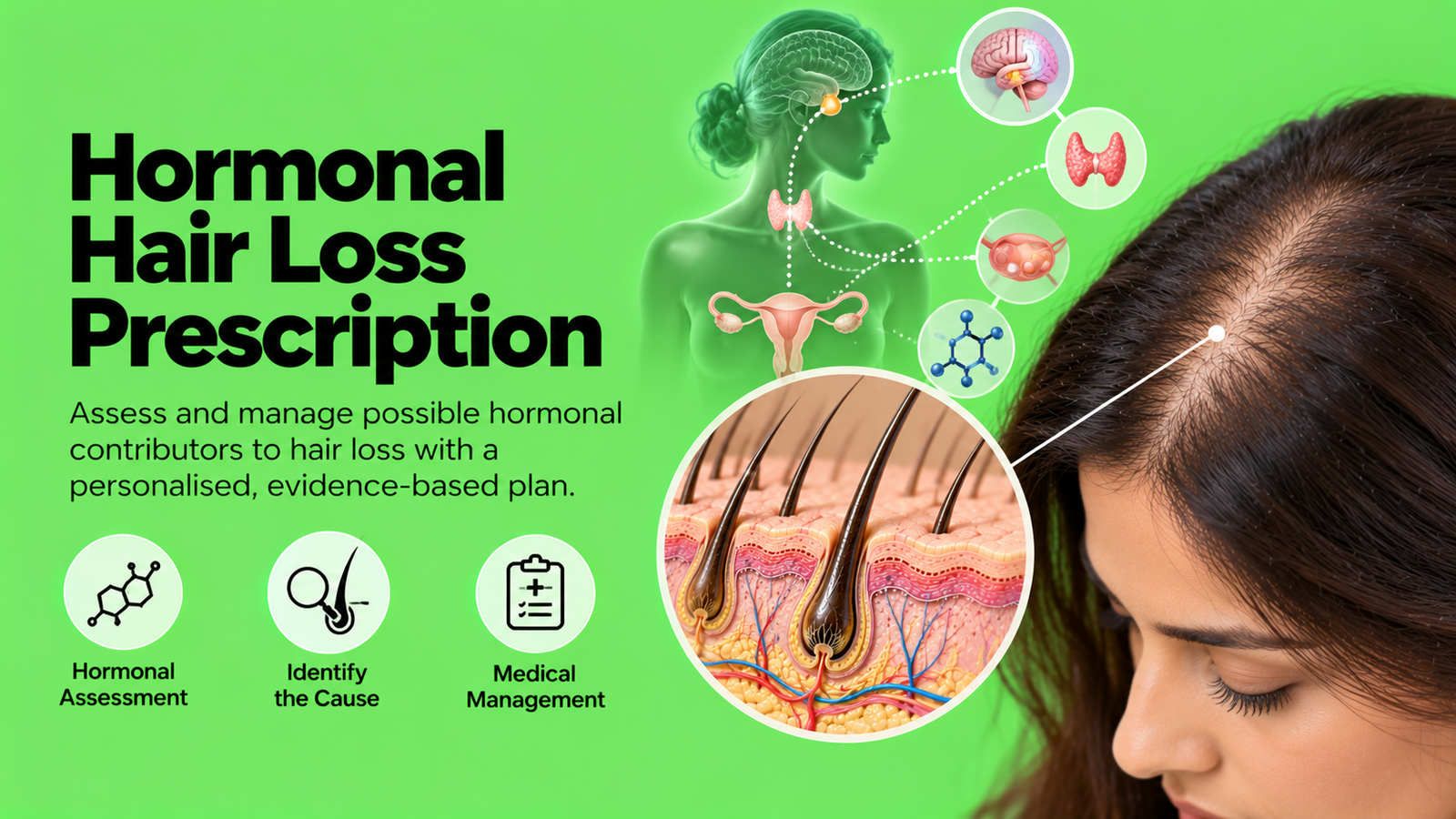
Hormonal Hair Loss Prescription
Hormones can influence scalp-hair growth, follicular activity and hair-shaft calibre. However, not every woman experiencing thinning or shedding has a hormonal disorder.
Hair loss associated with menstrual irregularity, symptoms of androgen excess, perimenopause or a diagnosed endocrine condition may require a different evaluation from hair loss caused by temporary shedding, nutritional factors or primary female pattern thinning.
A Hormonal Hair Loss Prescription focuses on determining whether hormonal factors are genuinely contributing to the problem and whether treatment should address an underlying medical condition, the hair follicles themselves or both.
At Anagen Hair Transplant Clinic, Mumbai, the objective is to establish a medically meaningful diagnosis before considering hormonal investigations or medication.
How Can Hormones Affect Female Hair?
Hormones interact with hair follicles throughout life. Their effects depend on the individual, the scalp region, genetic susceptibility and the specific hormonal environment.
Androgen-related follicular sensitivity can contribute to progressive miniaturisation in some women. Other changes associated with pregnancy, childbirth and menopause may alter the hair cycle or influence perceived density.
A woman can also have female pattern hair loss without elevated circulating androgen levels.
Therefore, the presence of hair thinning alone is not enough to diagnose hormonal imbalance.
When Might a Hormonal Contributor Be Suspected?
The clinician may consider hormonal or endocrine evaluation when hair thinning occurs alongside additional clinical features.
These may include persistent menstrual irregularity, significant acne, excessive facial or body hair, infertility concerns or other features suggesting androgen excess.
Age, perimenopausal or menopausal changes, medical history, medication use and relevant reproductive circumstances can also influence assessment.
The onset and speed of progression matter. Rapidly developing hair loss accompanied by new signs of virilisation, such as a deepening voice, warrants prompt specialist evaluation rather than routine cosmetic treatment.
A clinician should interpret these findings together. No single symptom or scalp photograph establishes a hormonal diagnosis.
Hormonal Hair Loss and Female Pattern Hair Loss Are Not the Same
Female pattern hair loss describes a recognised clinical pattern of progressive thinning and follicular miniaturisation.
Hormonal hair loss is a broader descriptive term used when endocrine or reproductive factors are suspected to contribute.
The two can overlap, but they should not be treated as identical conditions.
For example, a woman with progressive central thinning may have female pattern hair loss without any clinical evidence of androgen excess. Another woman may have scalp thinning along with irregular menstrual cycles and significant acne, warranting assessment for a potential endocrine contributor.
Treatment should follow the actual findings rather than the label used in an online search.
Prescription Overview
Primary Concern: Female hair thinning or shedding where hormonal or endocrine factors are clinically suspected.
Assessment Focus: Scalp-hair pattern, onset and progression, menstrual or reproductive history where relevant, symptoms of androgen excess and medical history.
Possible Contributing Factors: Androgen-related conditions, PCOS in selected patients, reproductive hormonal changes, menopausal changes, medication effects or overlapping non-hormonal hair disorders.
Prescription Goal: Identify and manage genuine hormonal contributors while selecting appropriate hair-specific treatment.
Possible Prescription Categories: Cause-directed endocrine management, appropriate topical hair treatment, selected systemic therapy, treatment of other diagnosed contributors and supportive scalp care.
Supportive Care: Appropriate hair care, clinically indicated nutrition support and coordination with the relevant treating specialist.
Monitoring: Hair changes, relevant clinical symptoms, medication tolerance and laboratory parameters when required by the selected treatment.
Follow-Up: Determined by diagnosis, severity, specialist advice and treatment safety requirements.
Pregnancy / Breastfeeding Considerations: Essential when considering endocrine medication, anti-androgen treatment or hair-growth therapy.
When Further Investigation May Be Needed: Features of androgen excess, substantial menstrual abnormalities, rapidly progressive symptoms or other signs suggesting endocrine disease.
When Another Treatment May Be Considered: Hair-specific management for confirmed pattern loss, or selected supportive treatment after the underlying condition has been assessed.
This page provides general prescription information and does not replace an individual clinical assessment. Treatment should be selected according to the diagnosis, medical history, reproductive status where relevant, examination and treatment goals.
What Medical History Is Important?
A hormone-focused consultation may review the timing of hair changes, menstrual history where applicable, pregnancy history, menopausal status and any known endocrine diagnosis.
The clinician may also ask about acne, increased facial or body hair, changes in weight, medication use and relevant fertility concerns.
A history of thyroid disease or symptoms suggesting thyroid dysfunction may require a separate thyroid-focused evaluation rather than automatically classifying the problem as androgen-related.
The medical history helps decide whether endocrine investigations are justified and which specialist should be involved.
Does Every Woman With Hair Loss Need Hormone Tests?
No.
Hormonal testing should be considered when history or examination identifies clinically relevant features. The choice of investigations depends on the suspected condition, medication history, reproductive circumstances and specialist assessment.
Hormone results also require appropriate interpretation. Menstrual-cycle phase, hormonal contraception, menopause and other factors can affect the usefulness or interpretation of particular tests.
A full hormone panel for every woman with thinning is not medically justified.
Relevant investigations may be recommended when the history or examination suggests an underlying medical, nutritional or hormonal contributor.
If significant androgen excess is suspected, the appropriate specialist may recommend targeted biochemical assessment and further investigations according to the clinical presentation.
Hormonal Hair Loss and PCOS
Polycystic ovary syndrome, or PCOS, is one possible condition associated with androgen-related symptoms and hair changes.
However, PCOS cannot be diagnosed from hair thinning alone.
A clinician may consider PCOS when scalp-hair changes occur alongside relevant features such as menstrual irregularity, acne, excess facial or body hair or other clinical findings.
Diagnosis requires an appropriate medical evaluation using recognised criteria. Some women with PCOS do not experience significant scalp-hair loss, while many women with hair loss do not have PCOS.
Where PCOS is suspected or diagnosed, hair management may need to be coordinated with a gynaecologist or endocrinologist.
Treatment of the underlying condition and management of existing scalp-hair miniaturisation are separate but potentially complementary objectives.
Can Menopause Affect Hair Density?
Some women notice changes in hair density during perimenopause or after menopause.
Changes in the hormonal environment, age-related factors and genetic predisposition can contribute to altered hair characteristics or the emergence of female pattern thinning.
However, menopause should not automatically be assumed to explain every new episode of hair loss.
Rapid shedding, inflammation, systemic symptoms or unusual patterns may require investigation for another cause.
Hormone replacement therapy should not be presented as a routine standalone hair-loss prescription. Its indications, benefits and risks belong to an appropriate menopause or gynaecological assessment.
What May Be Included in a Hormonal Hair Loss Prescription?
1. Treatment of the Underlying Hormonal Condition
When a specific endocrine disorder is confirmed, management should address that diagnosis under the appropriate medical specialist.
Hair changes may improve when an important contributing factor is treated, but the response may be incomplete or delayed.
2. Hair-Specific Prescription Treatment
If the patient also has female pattern hair loss, treatment directed at affected follicles may be considered.
Topical minoxidil is one established option for female pattern hair loss. Other medications, including selected oral therapies, require individual assessment.
Treatment should not be chosen solely because the patient suspects hormonal imbalance.
3. Selected Anti-Androgen Treatment
In appropriate clinical circumstances, a specialist may consider medicines that influence androgen activity.
Such treatment requires careful review of the diagnosis, pregnancy potential where relevant, contraindications, adverse effects, drug interactions and necessary monitoring.
Some medicines used for female hair loss are prescribed off-label. Certain anti-androgen treatments may pose fetal risks, and some have other significant systemic safety considerations.
4. Management of Other Hair-Loss Contributors
A woman with a hormonal disorder can simultaneously have telogen effluvium, nutritional deficiency, scalp inflammation or another condition.
These require separate clinical attention where indicated.
5. Supportive Scalp Care
Appropriate hair care and treatment of scalp problems may reduce breakage and improve comfort. Such measures do not substitute for endocrine management or clinically appropriate follicular treatment.
Pregnancy, Breastfeeding and Medication Safety
Reproductive status can materially affect hormonal hair-loss treatment.
Some systemic therapies and anti-androgen medicines must be avoided during pregnancy and may require effective contraception in patients who could become pregnant. Minoxidil also has important pregnancy and breastfeeding precautions.
Menopausal status, medical conditions, blood pressure, kidney function and medication interactions may influence selection and monitoring of particular treatments.
The clinician must establish whether a proposed medication is appropriate for the individual patient.
No woman should begin hormonal medication solely on the basis of a presumed link between her hair loss and hormone levels.
Monitoring and Long-Term Management
Follow-up may assess changes in central scalp density, miniaturisation, shedding and overall symptoms.
If a hormonal disorder is being treated, its response should be monitored by the relevant clinician using appropriate clinical and laboratory measures.
Hair response may be slower than improvement in other symptoms because follicles follow biological growth cycles.
Some patients need ongoing hair-specific management even after an endocrine condition is treated, particularly when female pattern hair loss coexists.
When Might Biologix or Hair Transplantation Be Considered?
If a woman has persistent female pattern thinning after the relevant medical evaluation, selected supportive procedures may be discussed according to diagnosis, evidence and suitability.
PRP Hair Treatment or Advanced GFC Hair Treatment should not be described as treatments that correct an endocrine disorder.
Hair transplantation has a distinct structural role. It may be considered in selected stable cases with adequate donor hair, but not simply because hormonal hair loss has been suspected or diagnosed.
Active, unstable loss or widespread donor miniaturisation may affect surgical suitability.
Realistic Expectations
Treating a hormonal contributor does not guarantee immediate hair growth or complete density restoration.
Results depend on the underlying condition, the presence of female pattern miniaturisation, follicular health, treatment tolerability and follow-up.
Some women experience improvement after cause-directed management. Others require additional hair-specific treatment, and some forms of loss may not be fully reversible.
A medically sound plan should distinguish hormonal disease control from hair-restoration expectations.
Frequently Asked Questions
1. How do I know if my hair loss is hormonal?
Hair thinning by itself cannot confirm a hormonal cause. Relevant medical history, associated symptoms, scalp examination and selected investigations may help identify a contributor.
2. Does PCOS always cause hair loss?
No. Hair loss is one possible manifestation, but not every person with PCOS develops significant scalp thinning.
3. Do I need hormone tests?
Only when the clinical findings justify endocrine evaluation. Routine comprehensive hormonal testing is not necessary for every woman with hair loss.
4. Can menopause affect hair density?
Yes, menopausal changes may contribute to changes in hair characteristics and the presentation of female pattern thinning, but other causes still need consideration.
5. Is hormonal hair loss the same as female pattern hair loss?
No. Female pattern hair loss describes a pattern of follicular miniaturisation, while hormonal hair loss refers to suspected endocrine contributions. The two may overlap.
6. Can hormonal hair loss be treated?
Some underlying hormonal conditions and associated forms of hair thinning can be managed. The treatment and likely response depend on the diagnosis.
7. Will hormonal treatment alone restore my hair?
Not necessarily. A patient may also have follicular miniaturisation or another hair disorder requiring separate management.
Get Your Hormonal Hair Loss Concern Assessed
Female hair loss should not automatically be attributed to hormones or PCOS. The appropriate next step is to determine whether an endocrine contributor is clinically likely and whether the scalp findings indicate a separate or overlapping hair-loss diagnosis.
Anagen’s Hair Prescription Consultation can help establish a diagnosis-led plan and identify when further dermatological, gynaecological or endocrine assessment is appropriate.