





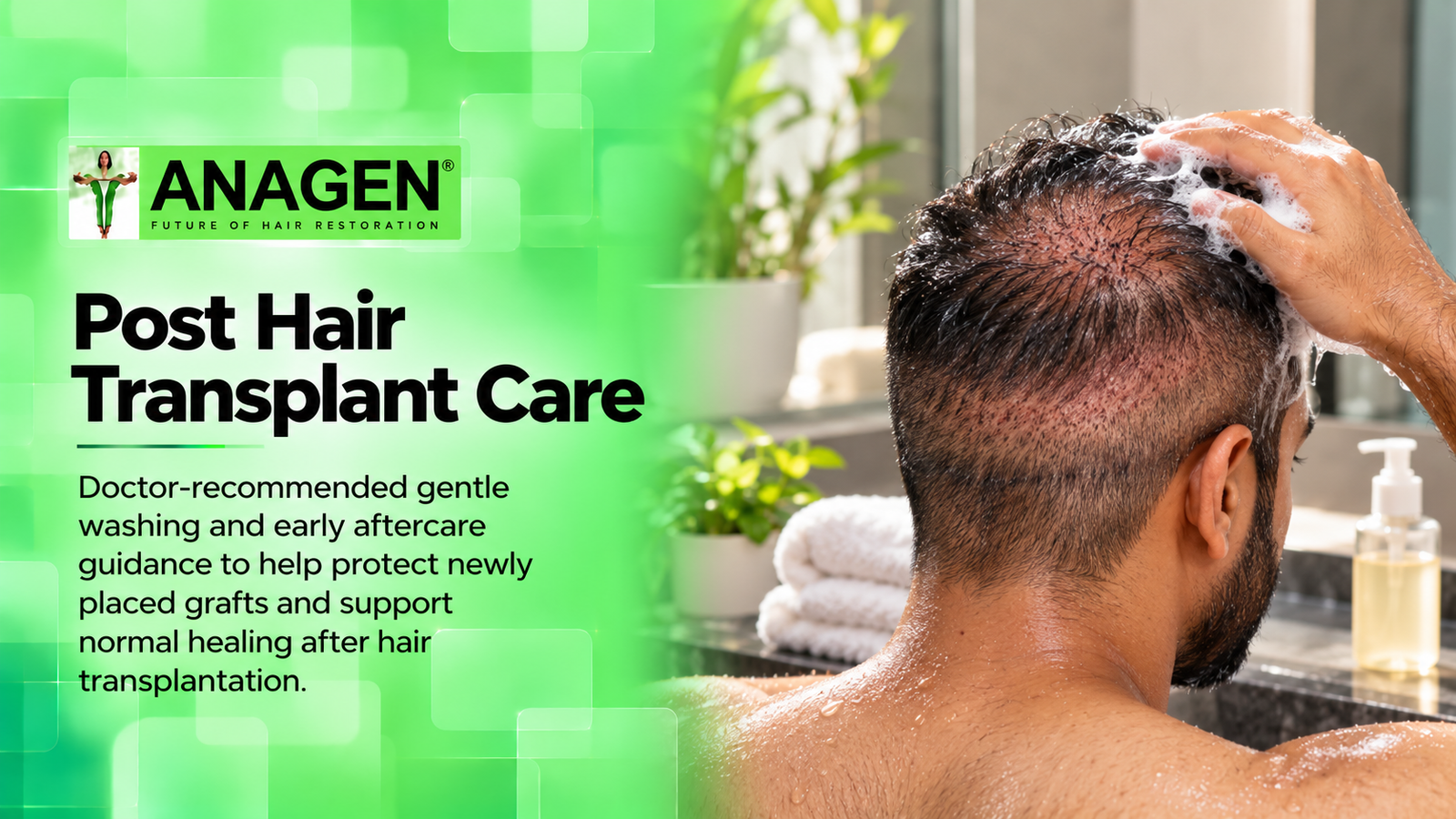
POST TRANSPLANT HAIR CARE
Proper care after a hair transplant is an important part of the recovery process.
The newly transplanted area and the donor region require particular attention during the early healing period. Washing technique, scalp protection, medication use and activity restrictions should follow the instructions given by your treating surgeon.
At Anagen Hair Transplant Clinic, Mumbai, we encourage patients to understand the different stages of postoperative care and seek clinical guidance whenever their recovery does not appear to be progressing as expected.
Important: This guide provides general educational information. The postoperative instructions issued by your operating surgeon take priority, including the timing of the first wash, prescribed medicines and follow-up visits.
Why Is Post-Transplant Hair Care Different?
A hair transplant creates small recipient sites for follicular graft placement and extraction sites in the donor region.
Both areas need time to heal.
During early recovery, inappropriate rubbing, scratching, pressure or use of unapproved products may disturb healing tissues.
Postoperative care therefore focuses on:
- Protecting newly implanted grafts.
- Supporting normal scalp healing.
- Keeping the donor and recipient areas appropriately clean.
- Avoiding unnecessary pressure and friction.
- Recognising possible complications.
- Following medical instructions and scheduled reviews.
The donor and recipient regions may have different care requirements.
The First Few Days After Hair Transplantation
The initial postoperative period requires particular care.
Protect the Transplanted Area
Avoid touching, scratching, rubbing or picking at the grafts.
Do not attempt to remove crusts manually or apply products to the recipient area unless permitted by the treating surgeon.
Follow the Prescribed Washing Schedule
The first wash and subsequent cleansing method must follow the clinic’s specific postoperative instructions.
Do not independently begin vigorous washing or place the scalp under high-pressure water.
Avoid Unnecessary Pressure
Follow your surgeon’s guidance on sleeping position, protective headwear and avoiding contact with the newly transplanted area.
Take Medicines Only as Directed
Use prescribed medication according to the discharge instructions.
Do not add antibiotics, steroid creams, antiseptics, hair-growth products or supplements simply because they are suggested online.
Report Unusual Symptoms
Contact the treating clinic if you experience worsening pain, increasing redness, significant swelling, pus-like discharge, fever or persistent bleeding.
Severe or rapidly worsening symptoms require prompt medical assessment.
How Should You Wash Your Hair After a Transplant?
Gentle cleansing is part of recovery, but the correct timing and technique depend on the procedure and surgeon’s instructions.
Once your surgeon has permitted washing, the recommended approach may include:
1. Use the Approved Cleanser
Use only the shampoo or cleansing product recommended for your postoperative stage.
Avoid introducing unfamiliar cosmetic or medicated products during early healing.
2. Avoid Strong Water Pressure
Follow your clinic’s instructions for the method of rinsing. Direct forceful water pressure onto the recipient area should be avoided during the vulnerable early stage.
3. Do Not Scrub the Grafts
Avoid fingernail scratching, forceful massage or attempts to detach crusts.
4. Dry the Scalp Carefully
Use the drying method approved by your surgeon. Avoid rubbing with towels or exposing healing areas to unnecessary heat.
5. Resume Normal Washing Gradually
Normal hair washing and styling should be reintroduced according to healing progress and the postoperative protocol.
Patients should not assume that instructions from another clinic apply to their own procedure.
What to Expect During the Following Weeks
Recovery varies by patient, surgical technique and clinical condition.
Crusting and Scalp Appearance
Small crusts may develop around recipient sites. These typically change as healing progresses.
Do not scratch, peel or forcibly remove crusts. If crusting persists longer than expected or is accompanied by concerning symptoms, contact the clinic.
Redness, Itching and Sensitivity
Temporary redness, tenderness, altered sensation and itching may occur.
However, increasing pain, spreading redness, unusual discharge or substantial persistent swelling should not automatically be assumed to be normal healing.
Temporary Shedding
Some transplanted hair shafts may shed during the weeks following surgery.
This does not necessarily mean the implanted follicles have failed. The hair-growth cycle and visible recovery take time.
The exact pattern and timing of shedding and regrowth vary.
Donor-Area Recovery
The donor region may experience temporary sensitivity, redness or altered sensation.
Persistent irritation or signs of infection require assessment rather than repeated application of unapproved creams.
Activities and Products to Avoid Until Cleared
Depending on your recovery stage, the surgeon may restrict:
- Strenuous exercise and heavy sweating.
- Swimming or exposure to potentially contaminated water.
- Direct sun exposure.
- Tight helmets, caps or headwear causing friction.
- Hair colouring, chemical treatments and aggressive styling.
- Scalp massage and scratching.
- Unapproved oils, serums and topical medications.
The duration of these restrictions must be confirmed by the treating clinic.
Post-Transplant Care After Initial Healing
Once the scalp has healed adequately, hair care gradually shifts from immediate wound protection to routine scalp and hair maintenance.
Long-term management may include:
- Appropriate shampooing and conditioning.
- Treatment of persistent scalp conditions.
- Monitoring transplanted and native hair.
- Reviewing ongoing hair-loss progression.
- Using diagnosis-specific medication when prescribed.
- Follow-up consultations where clinically indicated.
Hair transplantation does not automatically stop progressive hair loss in surrounding native follicles.
For long-term prescription planning, explore our Post Hair Transplant Maintenance Prescription guide.
For general everyday product selection, explore Hair Care Routine.
When Should You Contact Your Hair Transplant Clinic?
Do not wait for a routine follow-up if you develop:
- Significant or worsening scalp pain.
- Spreading redness or unusual warmth.
- Pus, discharge or unpleasant odour.
- Fever or feeling systemically unwell.
- Persistent bleeding or rapidly increasing swelling.
- A concerning reaction after using a prescribed product.
Contact your surgical team promptly. Seek urgent medical care for severe symptoms or rapidly worsening illness.
Frequently Asked Questions
1. When can I wash my hair after a transplant?
Follow the exact schedule given by your surgeon. Initial washing protocols vary according to the procedure and clinic.
2. Can I use my regular shampoo immediately?
Not unless your surgeon has approved it. Early recovery may require a specifically recommended cleanser and technique.
3. Is itching normal after a hair transplant?
Some itching can occur during healing, but severe, persistent or worsening itching—particularly with redness, pain or discharge—should be reviewed.
4. Can I use hair oil after a transplant?
Do not apply oil to healing areas without approval. The timing of restarting cosmetic products depends on scalp recovery.
5. Is shedding after a hair transplant normal?
Temporary shedding of transplanted hair shafts is common. The pattern varies and should be discussed with your surgeon if you are concerned.
6. Does a hair transplant eliminate the need for hair-loss treatment?
No. Native hair may continue to thin due to the original underlying condition. Some patients benefit from ongoing medical management.
Need Guidance After Your Hair Transplant?
Post-transplant recovery should be reviewed according to your surgeon’s instructions, especially if symptoms or concerns arise.
If you underwent hair transplantation at Anagen, contact your treating team through your designated postoperative communication channel.
For general follow-up and hair maintenance enquiries, the clinic team can help arrange an appropriate assessment.
CTA: Contact Anagen on WhatsApp
You may also request a consultation for long-term hair maintenance concerns.