





HAIR CARE ROUTINE
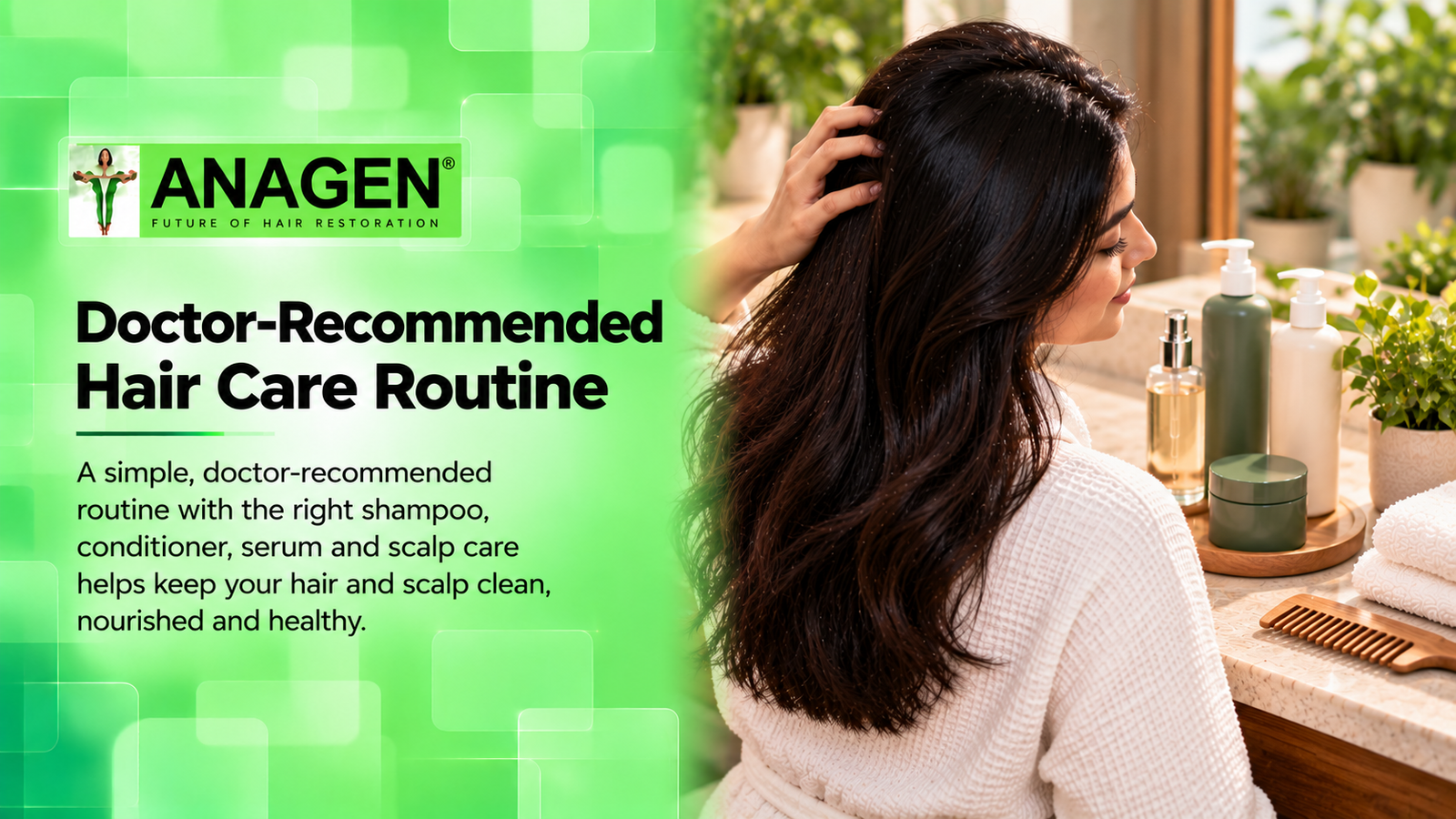
A good hair care routine does not need to be complicated. The right approach involves keeping your scalp clean, protecting your hair from unnecessary damage and selecting products suited to your individual hair type.
At Anagen Hair Clinic, Mumbai, we encourage practical hair care habits that support scalp comfort, reduce avoidable hair breakage and make hair easier to manage.
However, it is important to distinguish everyday hair care from medical hair-loss treatment. Shampoo, conditioner and serum may improve hair condition, but they cannot independently treat every cause of thinning or progressive hair loss.
Why Is a Regular Hair Care Routine Important?
Your scalp produces natural oils, while your hair is regularly exposed to sweat, dust, friction, styling products and environmental conditions.
An appropriate routine can help:
- Remove excess scalp oil, sweat and product buildup.
- Maintain scalp cleanliness and comfort.
- Reduce dryness, tangling and hair-shaft breakage.
- Improve hair manageability and appearance.
- Identify persistent scalp or hair-loss problems early.
The ideal routine depends on your scalp condition, hair texture, lifestyle and any underlying medical concerns.
A Simple Doctor-Recommended Hair Care Routine
Step 1 — Choose the Right Shampoo
Shampoo should be selected primarily according to your scalp condition and hair type.
An oily scalp may require more frequent cleansing, while a dry or sensitive scalp may benefit from a gentler product and a different washing schedule.
Apply shampoo mainly to the scalp, using your fingertips to cleanse without harsh scratching. Allow the lather to pass through the hair lengths while rinsing.
Washing frequency should be adjusted to oiliness, sweating, hair texture and scalp symptoms rather than following one fixed rule for everyone.
For guidance on choosing a suitable cleanser, explore our Hair Shampoo page.
Step 2 — Use Conditioner After Washing
Conditioner helps reduce friction between hair strands, improves detangling and makes hair more manageable.
Apply conditioner mainly to the hair lengths and ends, especially where strands are dry or prone to tangling.
People with very fine or oily hair may prefer lightweight formulations, while dry, curly or chemically treated hair may need more conditioning.
A conditioner is not a substitute for treatment of thinning hair, but it can help limit mechanical damage to existing strands.
Read more in our Hair Conditioner guide.
Step 3 — Dry and Detangle Gently
Wet hair can be vulnerable to damage from rough handling.
After washing, gently absorb excess water with a soft towel rather than rubbing the hair vigorously.
Detangle carefully, beginning at the ends and gradually working upwards. A wide-tooth comb may help, although the best detangling method depends on whether your hair is straight, curly or tightly textured.
Avoid pulling through knots or repeatedly brushing hair unnecessarily.
Step 4 — Minimise Heat and Styling Damage
Frequent use of high-temperature straighteners, curling irons and blow-dryers can contribute to dryness and hair-shaft damage.
Where possible:
- Allow hair to air-dry partially or completely.
- Use lower heat settings when styling.
- Avoid repeated high-temperature styling.
- Limit harsh chemical processing.
- Avoid hairstyles that place continuous tension on the roots.
People who regularly colour, straighten or chemically treat their hair may need additional conditioning and protective care.
Weekly Hair Care: What Should You Add?
Daily care is the foundation, but some hair types benefit from occasional additional conditioning.
Hair Masks
A suitable hair mask may help improve softness and manageability in dry, textured or chemically processed hair.
Frequency should depend on the product formulation and actual need. Masks do not repair destroyed follicles or reverse genetic baldness.
Explore the Hair Masks guide for additional information.
Hair Serums
Hair serums may help reduce frizz, improve surface smoothness and make styling easier.
A cosmetic serum applied to hair lengths is different from a medicated scalp treatment intended for a diagnosed hair-loss condition.
Product selection should reflect whether the goal is cosmetic hair care or medically supervised treatment.
Explore the Hair Serum page.
Hair and Scalp Review
Occasional scalp self-checks can help identify changes such as increased flaking, persistent itching, redness or progressive thinning.
If these symptoms develop, changing cosmetic products repeatedly may not be sufficient.
For ongoing scalp hygiene, read our Scalp Maintenance guide.
Hair Care Routine for Different Hair Types
Oily Scalp
If your scalp becomes oily quickly, more frequent shampooing may be appropriate. Avoid assuming that every oil-control product is suitable for sensitive or inflamed skin.
Dry or Curly Hair
Choose a cleansing and conditioning routine that preserves moisture and reduces friction. Excessive washing or aggressive detangling may worsen dryness and breakage.
Fine or Thinning Hair
Use lightweight products where appropriate and avoid hairstyles that create unnecessary tension.
If hair density is progressively reducing, arrange an assessment instead of relying only on volumising products.
Chemically Treated Hair
Prioritise conditioning, gentle handling and reduced exposure to repeated heat or chemical treatments.
Our Chemical Damage Hair Loss Prescription page explains when hair damage may require additional clinical assessment.
Does a Hair Care Routine Prevent Hair Loss?
A suitable routine can reduce certain forms of hair-shaft breakage and traction-related damage.
However, it cannot reliably prevent genetic pattern hair loss, autoimmune alopecia, medically related shedding or other causes of follicular hair loss.
If you experience persistent shedding, widening of the parting, a receding hairline or increasing scalp visibility, appropriate diagnosis matters more than changing shampoo repeatedly.
For preventive habits, explore Hair Fall Prevention Routine.
Frequently Asked Questions
1. Should I wash my hair every day?
Not necessarily. Washing frequency depends on scalp oiliness, hair texture, sweating and scalp conditions. Some people benefit from daily cleansing, while others require less frequent washing.
2. Does frequent shampooing cause baldness?
Appropriate shampooing does not cause genetic baldness. However, harsh handling or an unsuitable product may contribute to irritation, dryness or hair-shaft damage.
3. Is conditioner necessary?
Conditioner is useful for reducing friction and improving manageability, particularly for long, dry, curly or damaged hair.
4. Can hair oil replace conditioner?
Hair oils and conditioners serve different purposes. An oil may improve some cosmetic properties of hair, but it is not automatically a replacement for cleansing or conditioning.
5. Do I need hair supplements for healthy hair?
Not everyone requires supplements. They should be considered according to diet, medical history and confirmed deficiencies when relevant.
Get a Personalised Hair Care Recommendation at Anagen
A good routine should match your actual scalp and hair condition rather than simply follow popular product trends.
If you are experiencing persistent hair fall, thinning, scalp irritation or concerns about your current products, a clinical assessment can help determine whether basic care adjustments or medical management are appropriate.